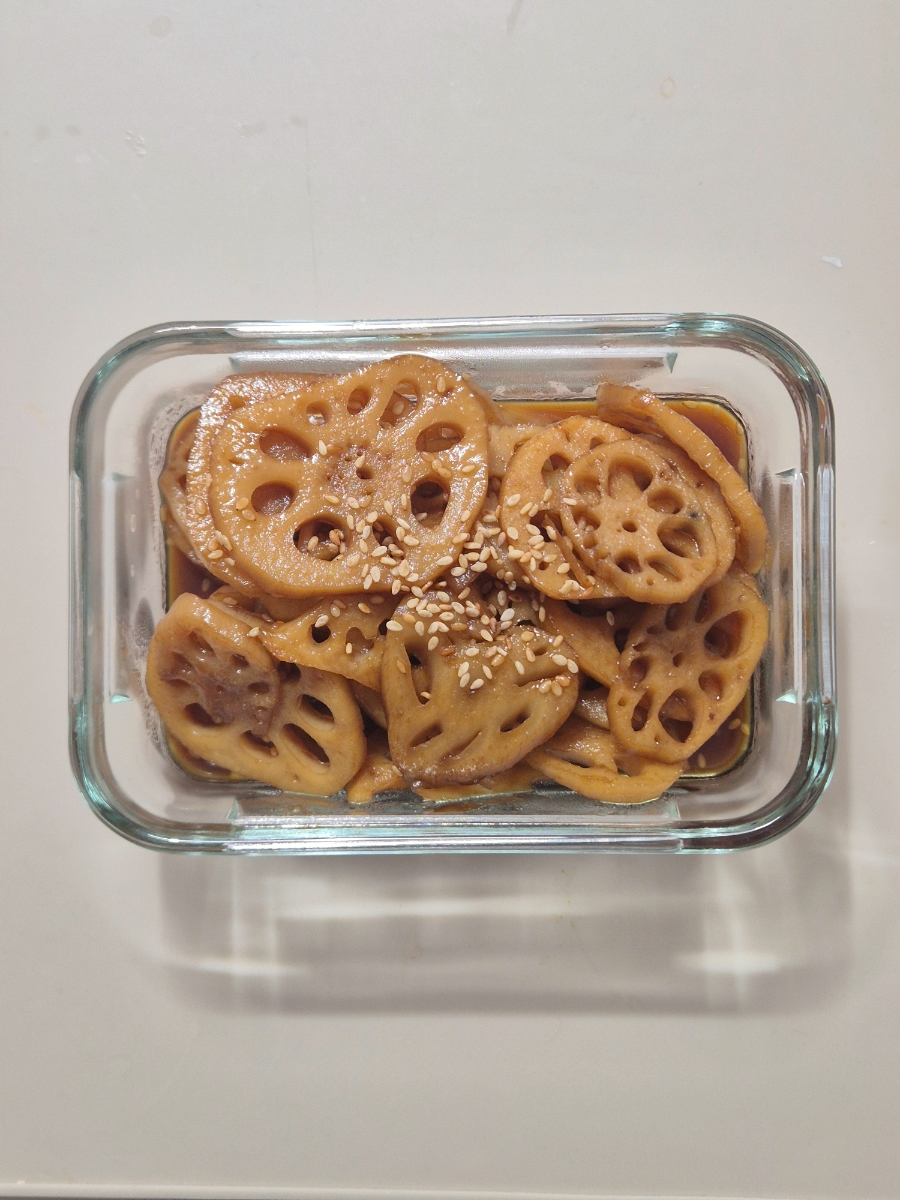
Braised lotus root, or yeongeun-jorim, is often simmered low and slow until it turns soft and chewy, and that version is delicious in its own way.
But I actually prefer the version that keeps a nice crunchy bite to it.
As long as you have peeled, sliced lotus root on hand, this dish comes together more easily than you’d expect, and it keeps well in the fridge for several days as a banchan.
Today I’m sharing my recipe for a savory, glossy yeongeun-jorim that holds onto its crisp texture.
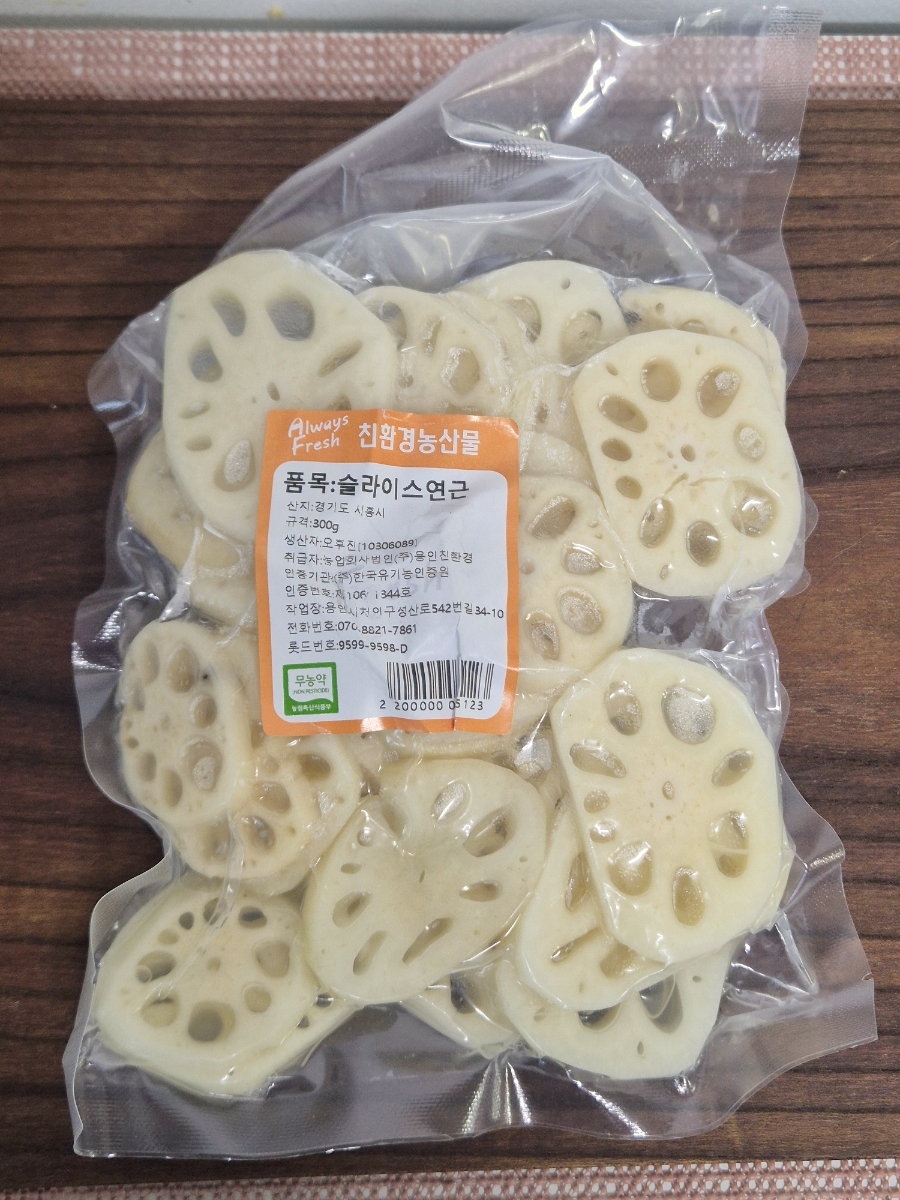
This is the peeled, sliced lotus root we’ll be using today.
Ingredients
- Lotus root – 300g (about 10.6 oz; peeled and sliced)
(1 T = 15 ml / 0.5 fl oz, 1 t = 5 ml / 0.17 fl oz)
Sauce
- Jin-ganjang – 3 T (Korean dark soy sauce used for cooking)
- Guk-ganjang – 2 T (Korean soup soy sauce; can substitute with regular soy sauce plus a pinch of salt)
- Sugar – 2 T
- Mirin – 2 T (Korean cooking rice wine)
- Mulyeot – 3 T (Korean rice syrup; can substitute with corn syrup or honey)
- Sesame seeds – to taste (toasted, for garnish)
(1 T = 15 ml / 0.5 fl oz, 1 t = 5 ml / 0.17 fl oz)
How to Make It
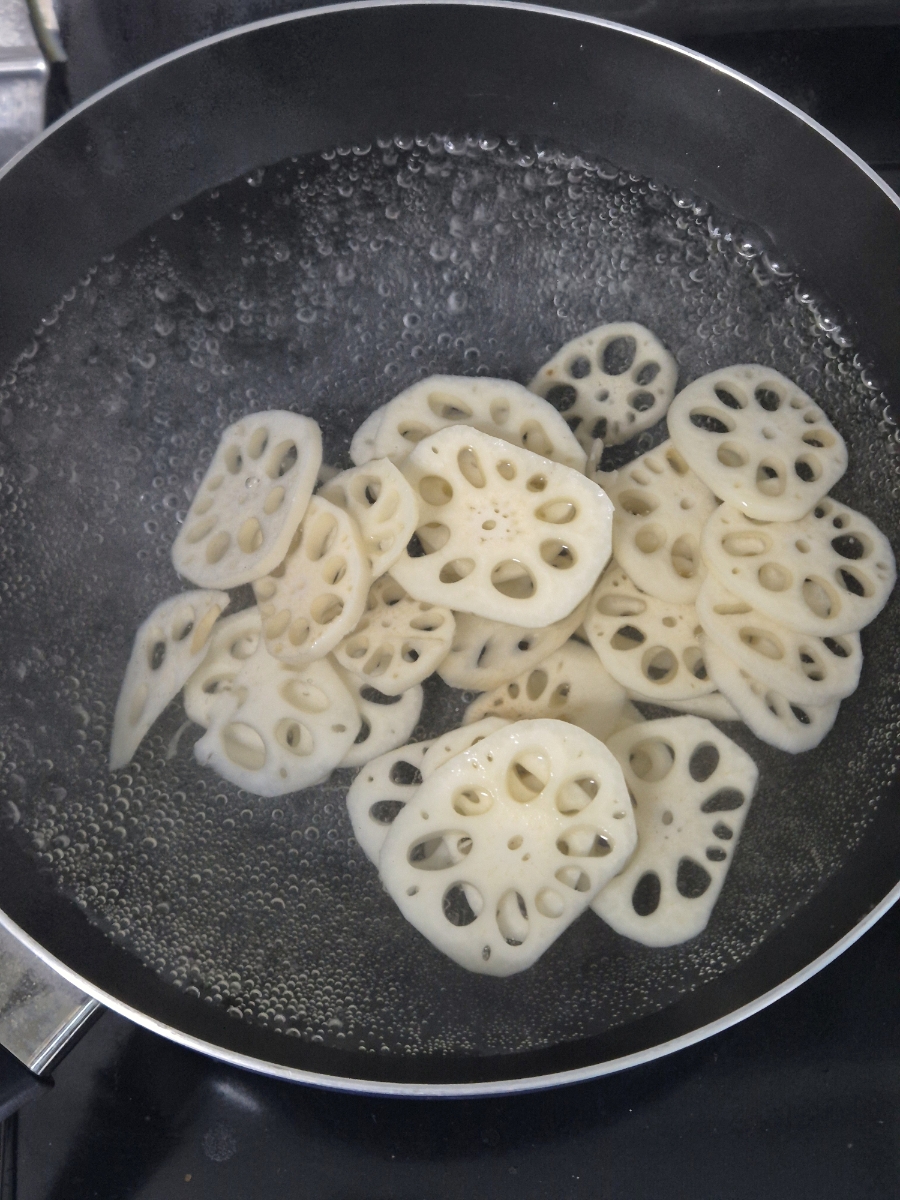
1Boil the prepared lotus root in boiling water for about 5 minutes.
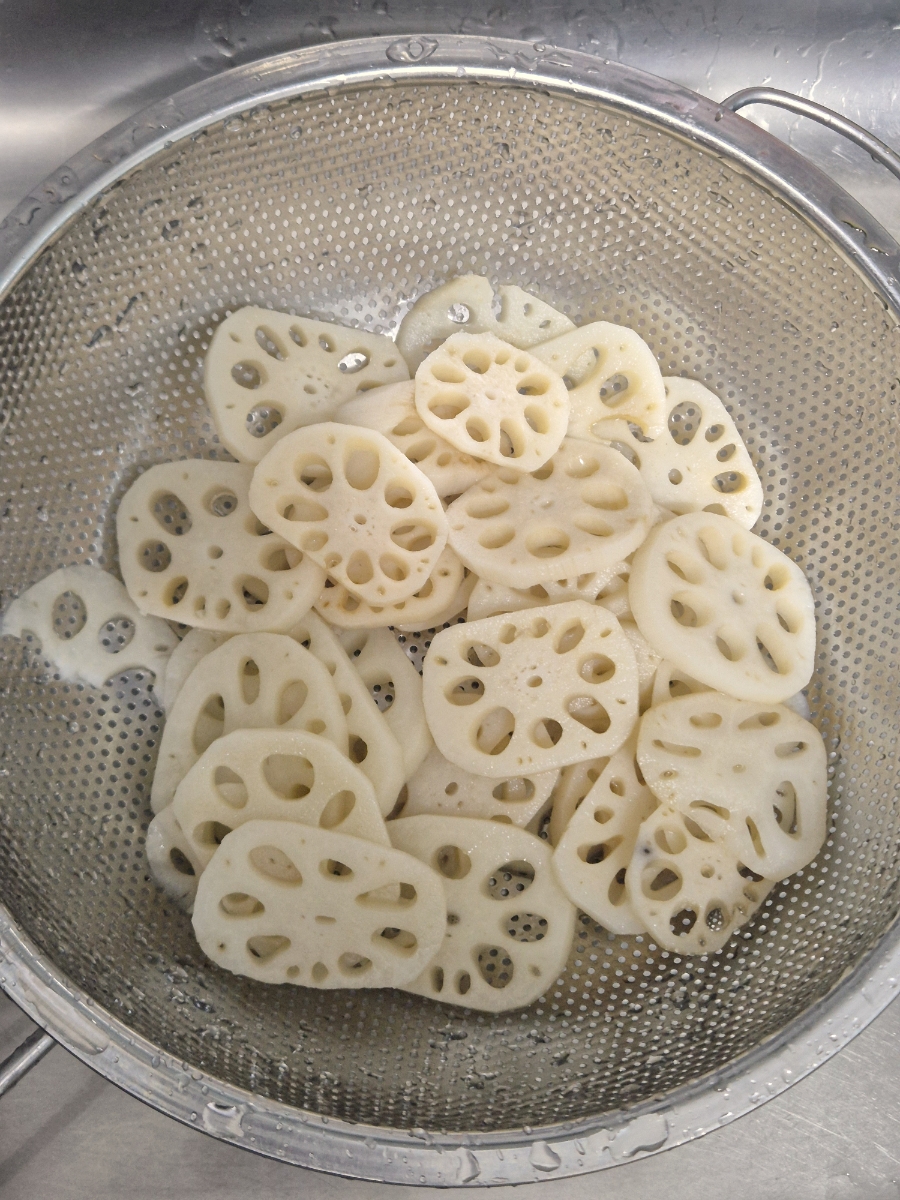
2Rinse the boiled lotus root under cold water to cool it down.
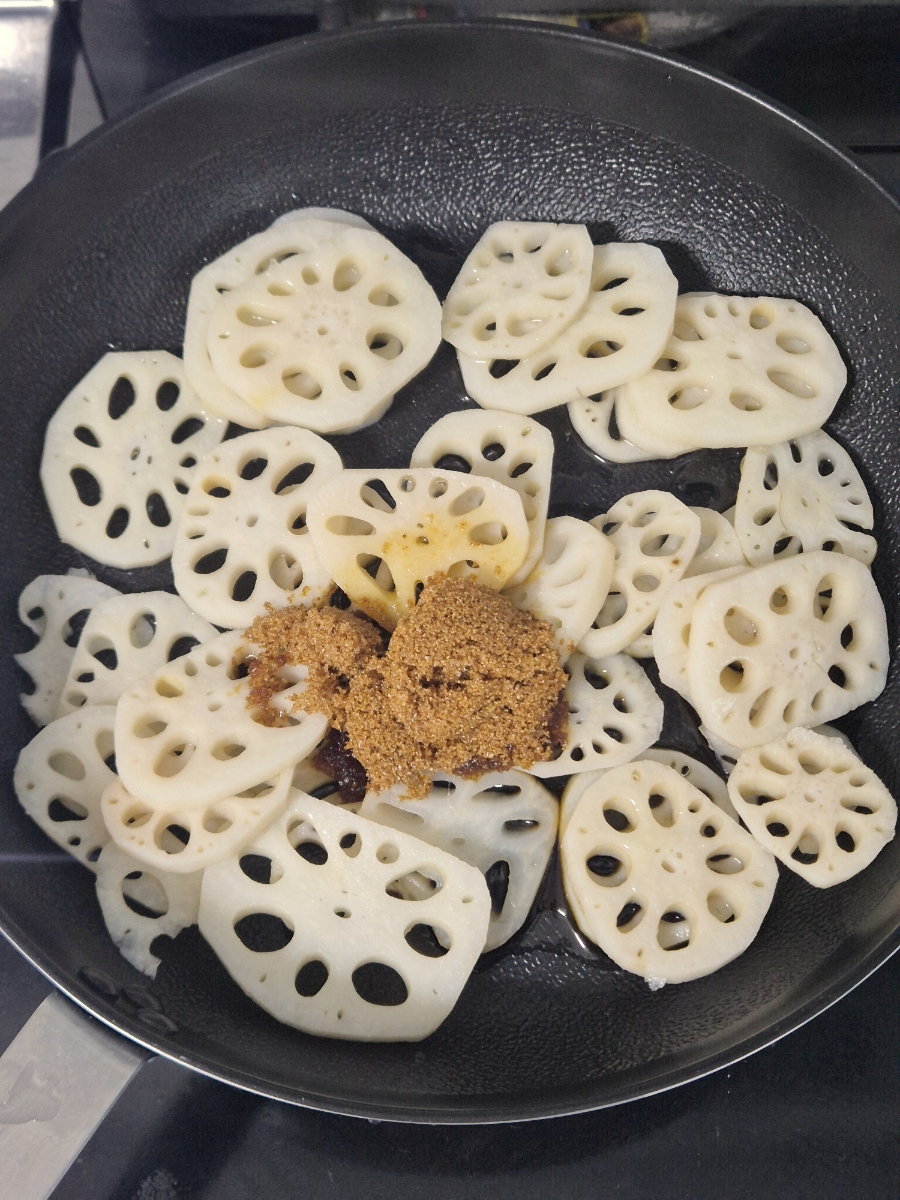
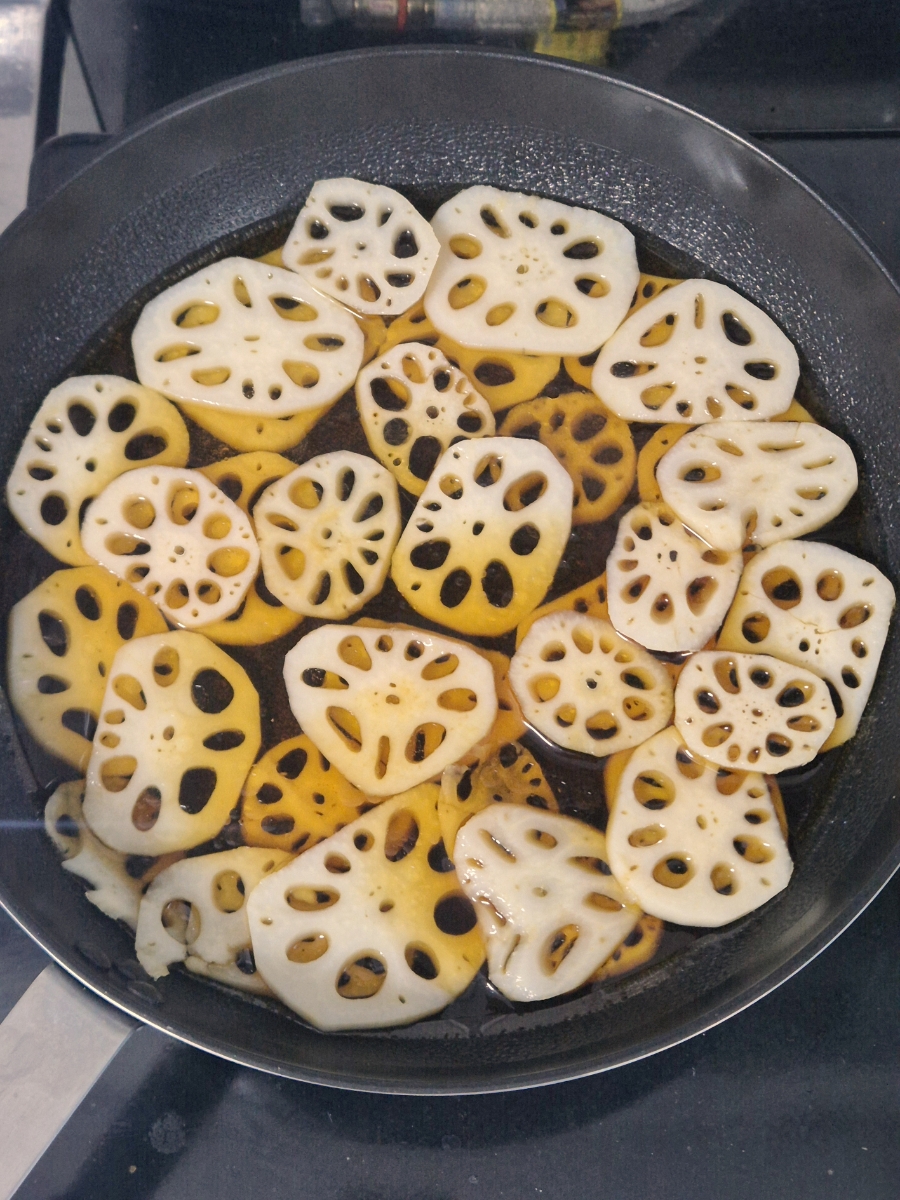
3Add the lotus root to a pan with the dark soy sauce, guk-ganjang, sugar, and mirin, pour in enough water to almost cover the lotus root, and simmer over medium heat for about 15 minutes.TipLotus root takes longer to cook through than you’d expect, so if the liquid reduces too much before it’s done, add a little water at a time as you continue cooking.
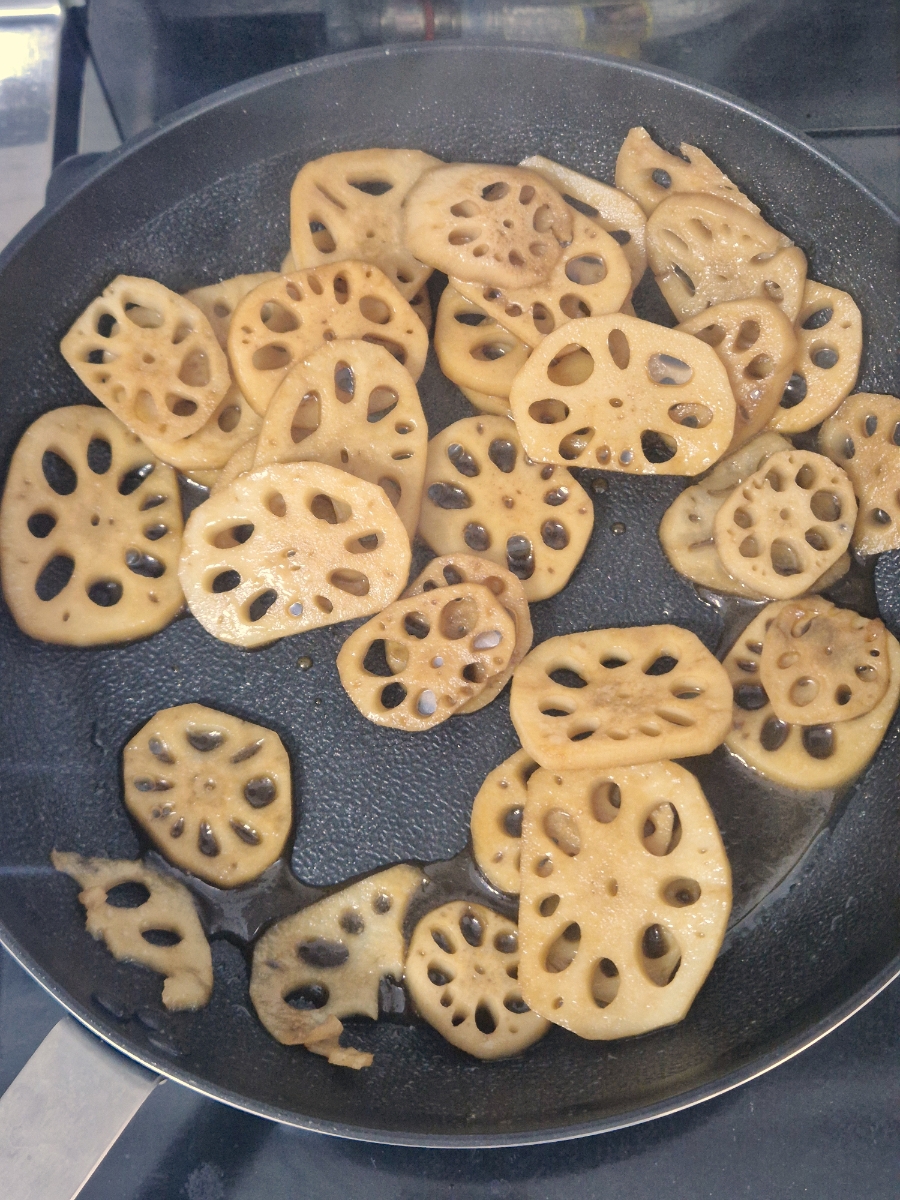
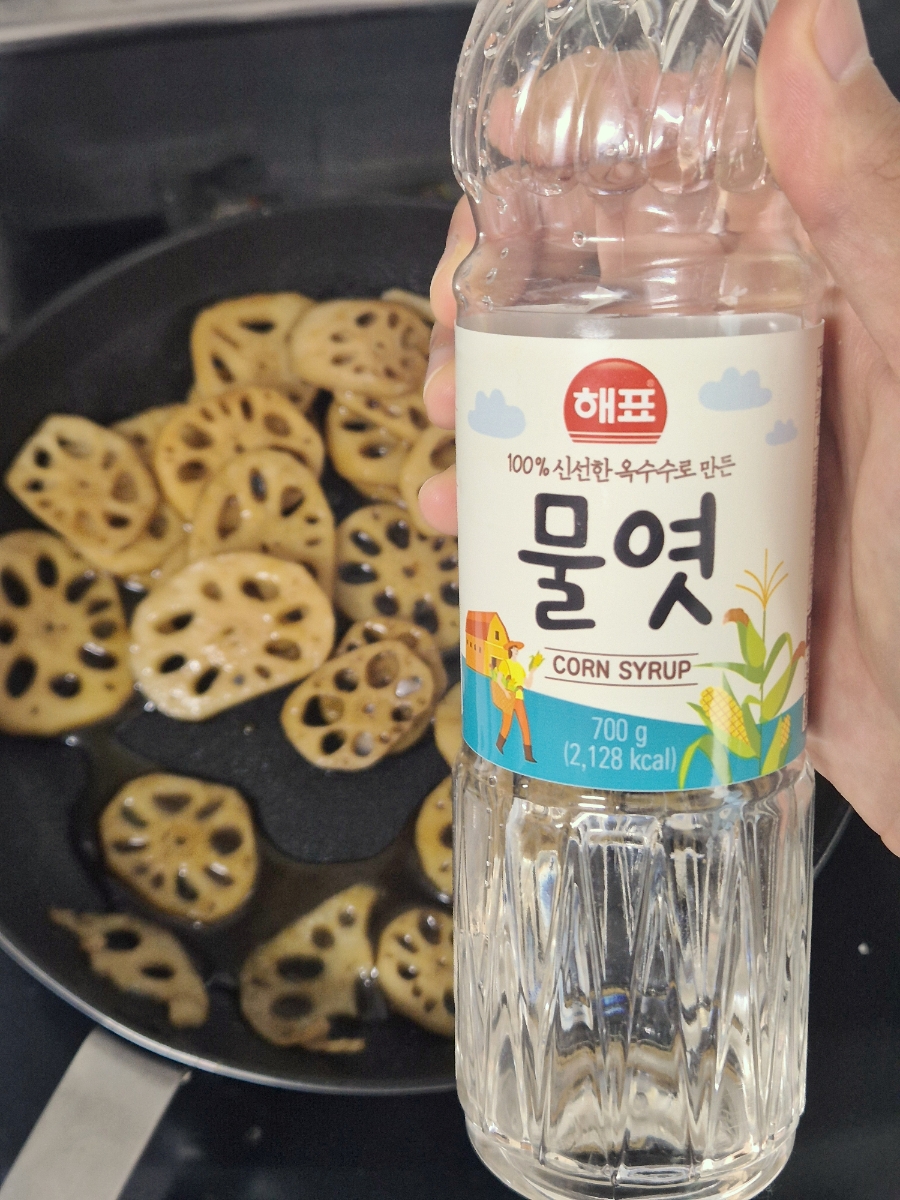
4Once most of the liquid has reduced, add the rice syrup and cook for another 3 minutes to coat the lotus root in a glossy glaze.TipAdd the rice syrup at the very end so the dish gets a nice shine without burning.
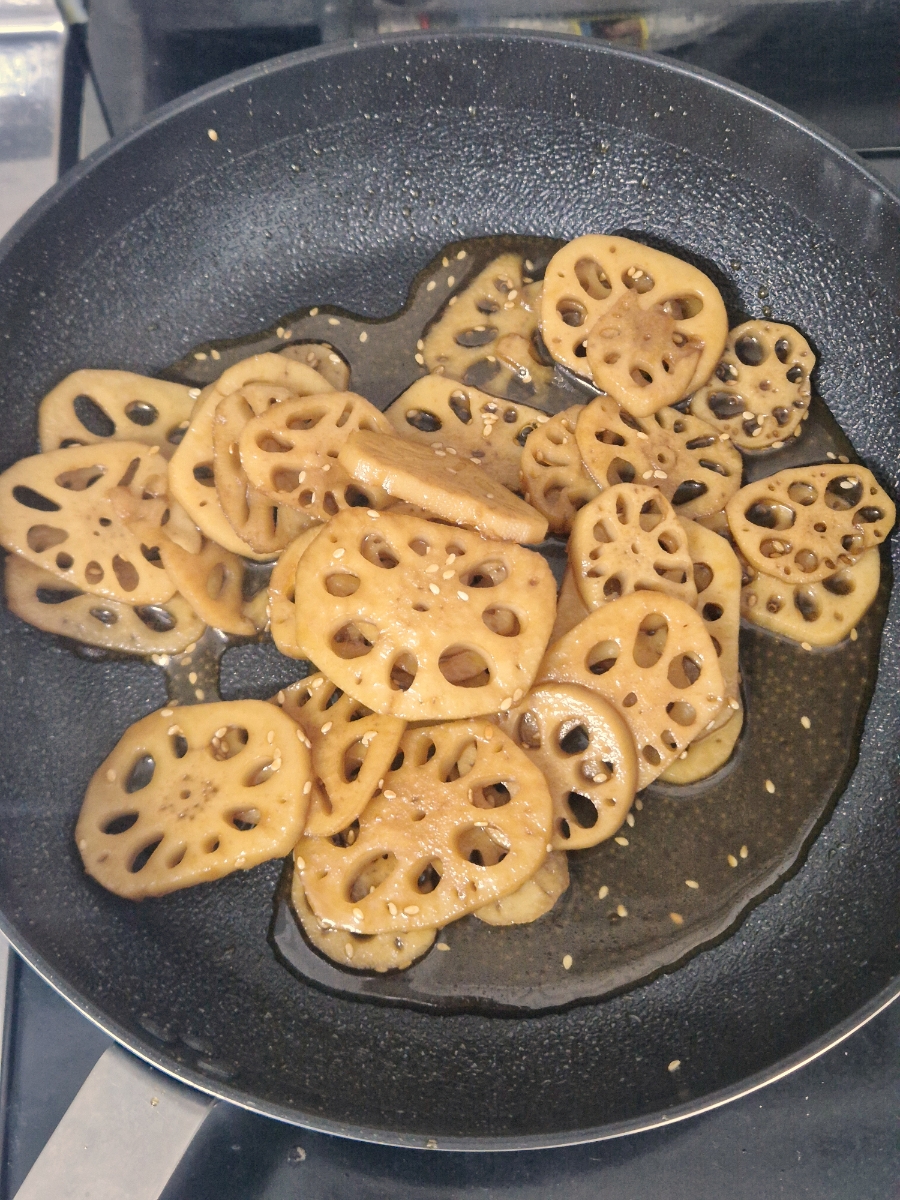
5Finish by sprinkling toasted sesame seeds on top.
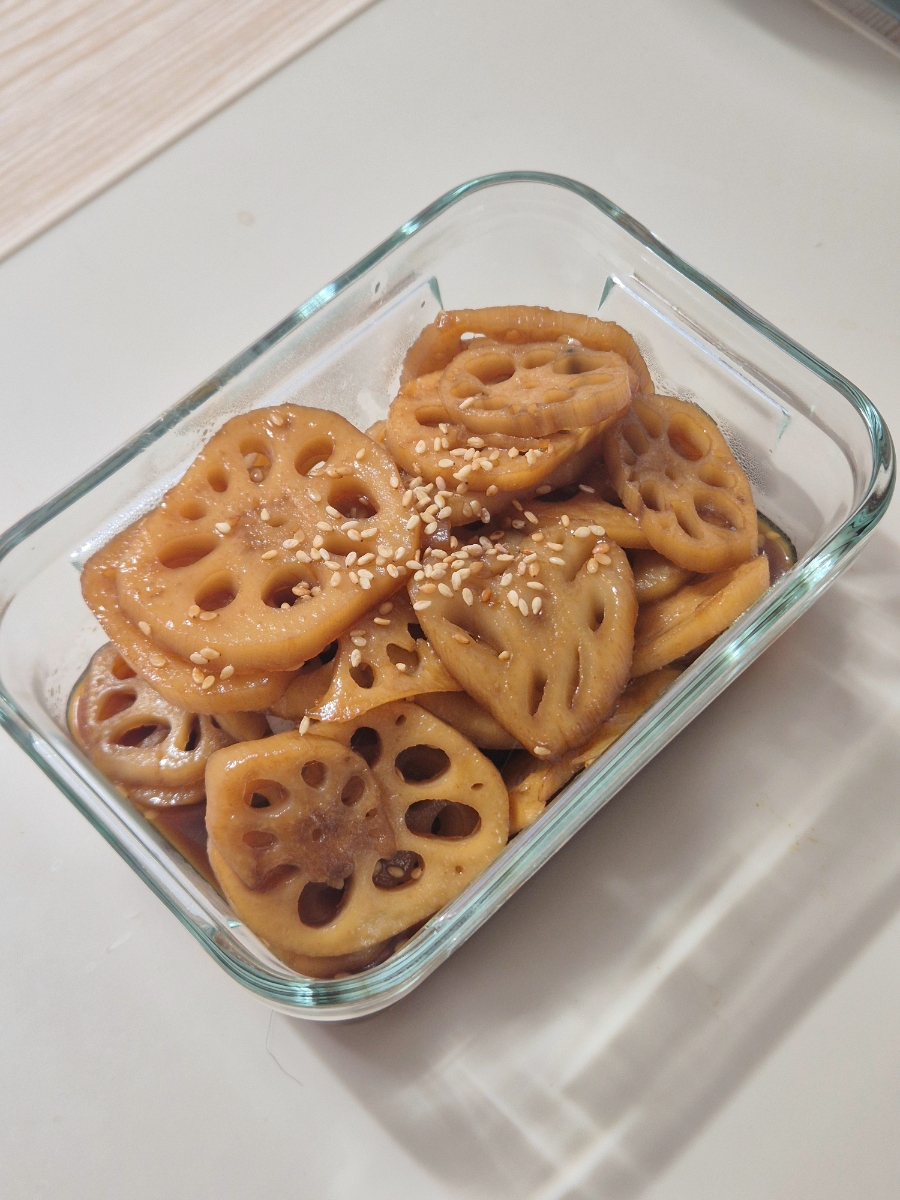
Yeongeun-jorim actually tastes even better once it has cooled and the seasoning has had time to settle in, rather than eating it right away.
If you like a crunchy texture, the key is not to over-simmer it.
It pairs perfectly with rice and also makes a great addition to lunchboxes, so give this recipe a try and enjoy.
Ingredients
- Lotus root – 300g (about 10.6 oz; peeled and sliced)
- (1 T = 15 ml / 0.5 fl oz, 1 t = 5 ml / 0.17 fl oz)
Sauce
- Jin-ganjang – 3 T (Korean dark soy sauce used for cooking)
- Guk-ganjang – 2 T (Korean soup soy sauce; can substitute with regular soy sauce plus a pinch of salt)
- Sugar – 2 T
- Mirin – 2 T (Korean cooking rice wine)
- Mulyeot – 3 T (Korean rice syrup; can substitute with corn syrup or honey)
- Sesame seeds – to taste (toasted, for garnish)
- (1 T = 15 ml / 0.5 fl oz, 1 t = 5 ml / 0.17 fl oz)
How to Make It
- Boil the prepared lotus root in boiling water for about 5 minutes.
- Rinse the boiled lotus root under cold water to cool it down.
- Add the lotus root to a pan with the dark soy sauce, guk-ganjang, sugar, and mirin, pour in enough water to almost cover the lotus root, and simmer over medium heat for about 15 minutes.
Tip.Lotus root takes longer to cook through than you'd expect, so if the liquid reduces too much before it's done, add a little water at a time as you continue cooking. - Once most of the liquid has reduced, add the rice syrup and cook for another 3 minutes to coat the lotus root in a glossy glaze.
Tip.Add the rice syrup at the very end so the dish gets a nice shine without burning. - Finish by sprinkling toasted sesame seeds on top.