Hi, this is Madeline. I saw actor Lee Jang-woo making garlic scape fried rice on I Live Alone, and it looked so good I couldn’t stop staring at the screen.
The ingredients were surprisingly simple too, so I decided to recreate it in my own kitchen right away. Follow along and give it a try with me.
Ingredients
- Rice – 6 to 8 servings (cooked rice, about one bowl per serving)
- Pork shoulder – 550g (about 1.2 lbs; ground or finely chopped pork shoulder, also called foreleg cut)
- Garlic scapes – 300g (about 10.5 oz; also known as garlic stems)
- Cheongyang chili peppers – 3 (Korean hot green chili peppers; can substitute with jalapeño or serrano peppers)
- Garlic – 15 cloves
- Green onion – 150g (about 5.3 oz)
- Gochugaru – 1 T (Korean red chili pepper flakes)
- Egg – to taste (as many as you like, for frying)
(1 T = 15 ml / 0.5 fl oz, 1 t = 5 ml / 0.17 fl oz)
Sauce
- Sugar – 1 T
- Pepper – to taste
- Mirin – 2 T (Japanese sweet rice wine)
- Fish sauce – 4 T
- Jin-ganjang – 1 T (Korean soy sauce used for everyday cooking; regular soy sauce works as a substitute)
- Dark soy sauce – 1 T (also called no-chu or lao chou, a Chinese-style aged soy sauce used mainly for color; regular soy sauce can be substituted if unavailable)
- Oyster sauce – 1 T
(1 T = 15 ml / 0.5 fl oz, 1 t = 5 ml / 0.17 fl oz)
How to Make It
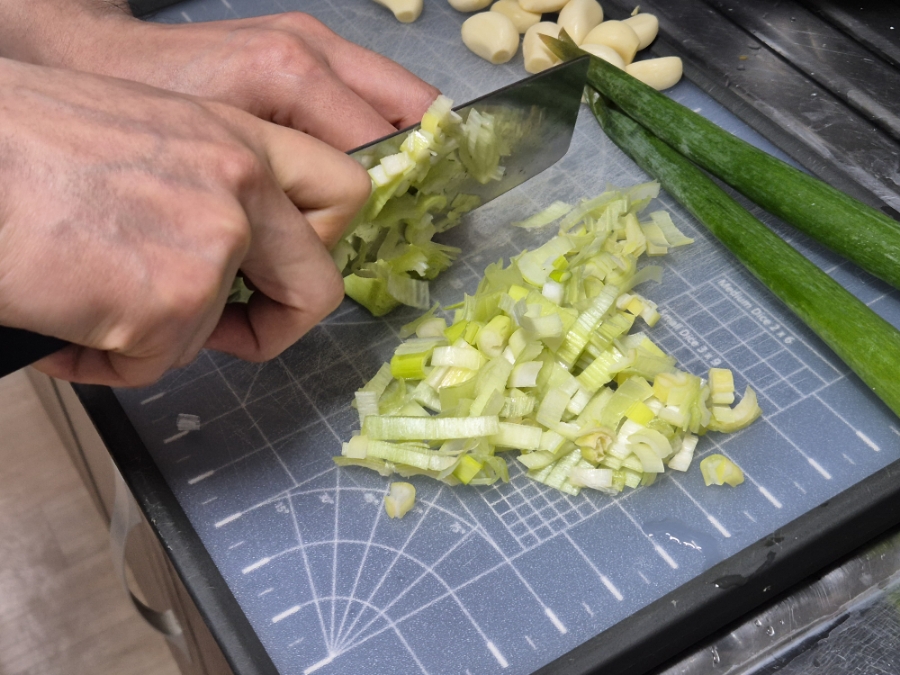

1Finely chop all the vegetables.

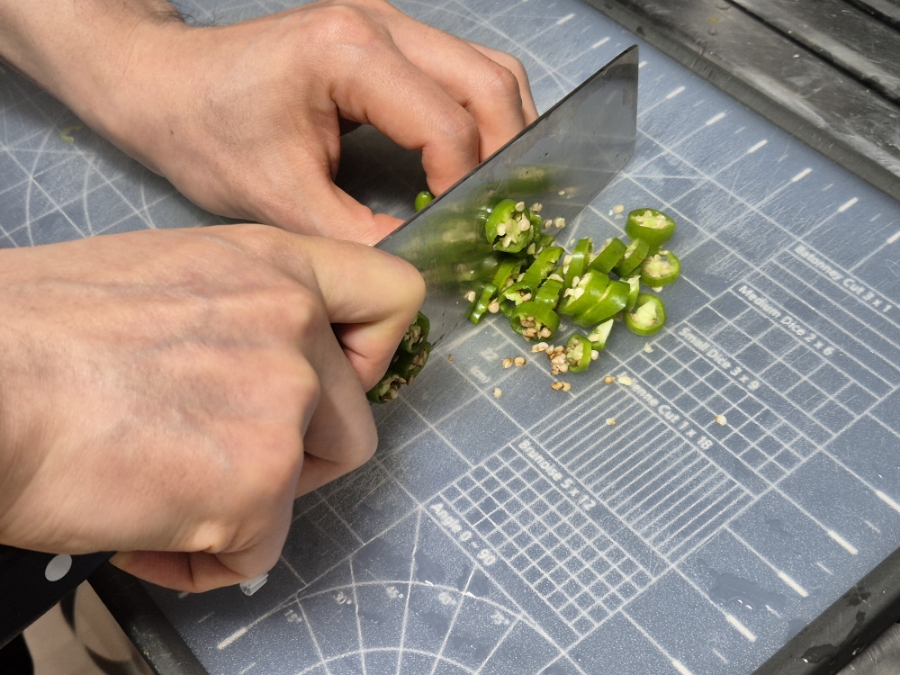
TipCut the garlic scapes into small pieces, about the size of a pea. This keeps the texture soft and makes them much easier to eat.
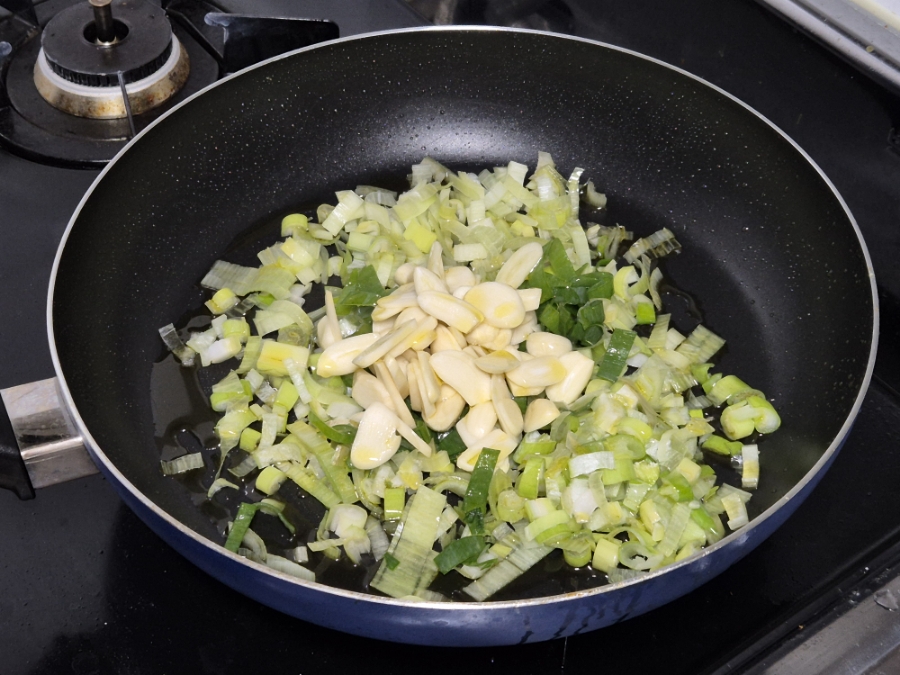
2Heat plenty of oil in a pan and sauté the green onion and garlic over medium heat until golden and fragrant.
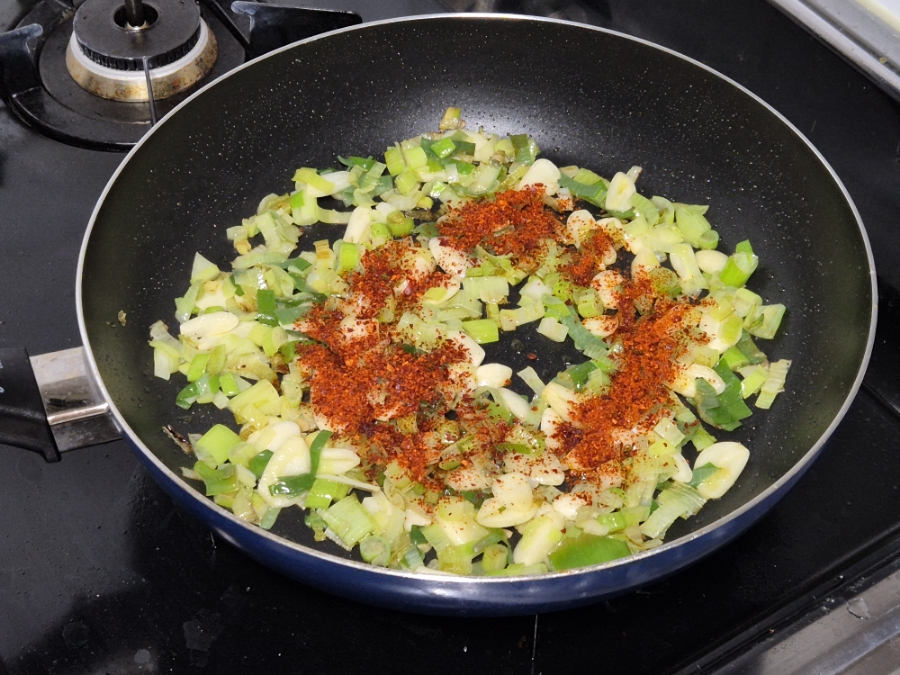
3Once golden, add a spoonful of gochugaru and stir-fry well.

4Once the gochugaru is fully mixed in, push everything to one side of the pan and add the ground pork to cook.

5When the pork is just slightly underdone and still a bit pink, add all the sauce ingredients and continue stir-frying.

6Once the pork is fully cooked and the sauce has soaked in, add the garlic scapes and stir-fry.

7Stir-fry for another 2 to 3 minutes, then add a spoonful of sugar and pepper to taste before finishing.TipAdding sugar too early can cause it to burn and turn bitter, so it’s best saved for the very end, almost like coating the dish in a thin glaze. The sugar also helps round out the pungent edge of the fish sauce, balancing the overall flavor.
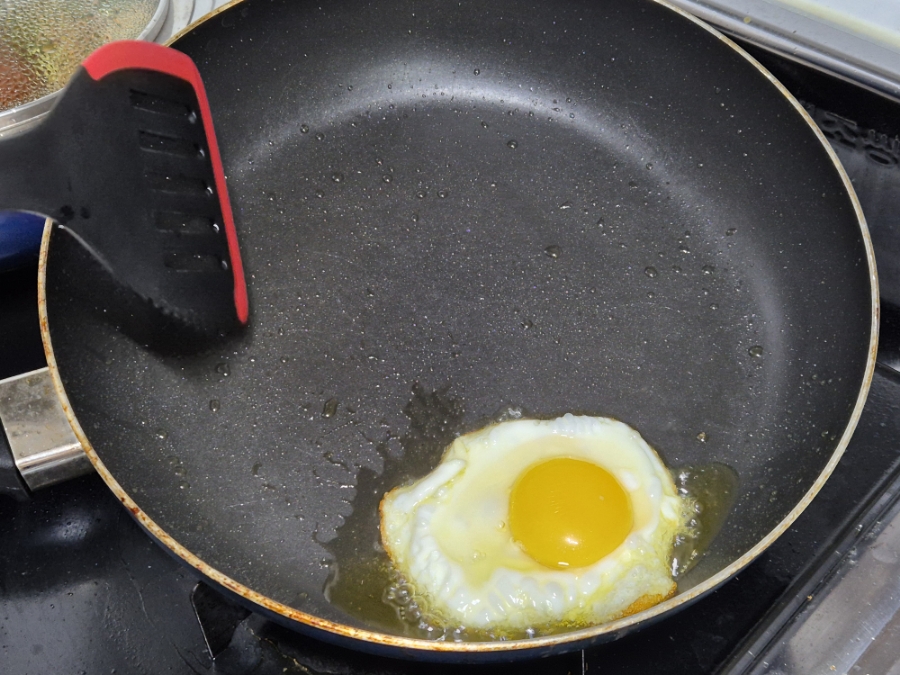
8Fry an egg to top the dish.TipUse plenty of oil and make sure the pan is well heated before adding the egg – this gives it a crisp, almost deep-fried texture that makes all the difference.

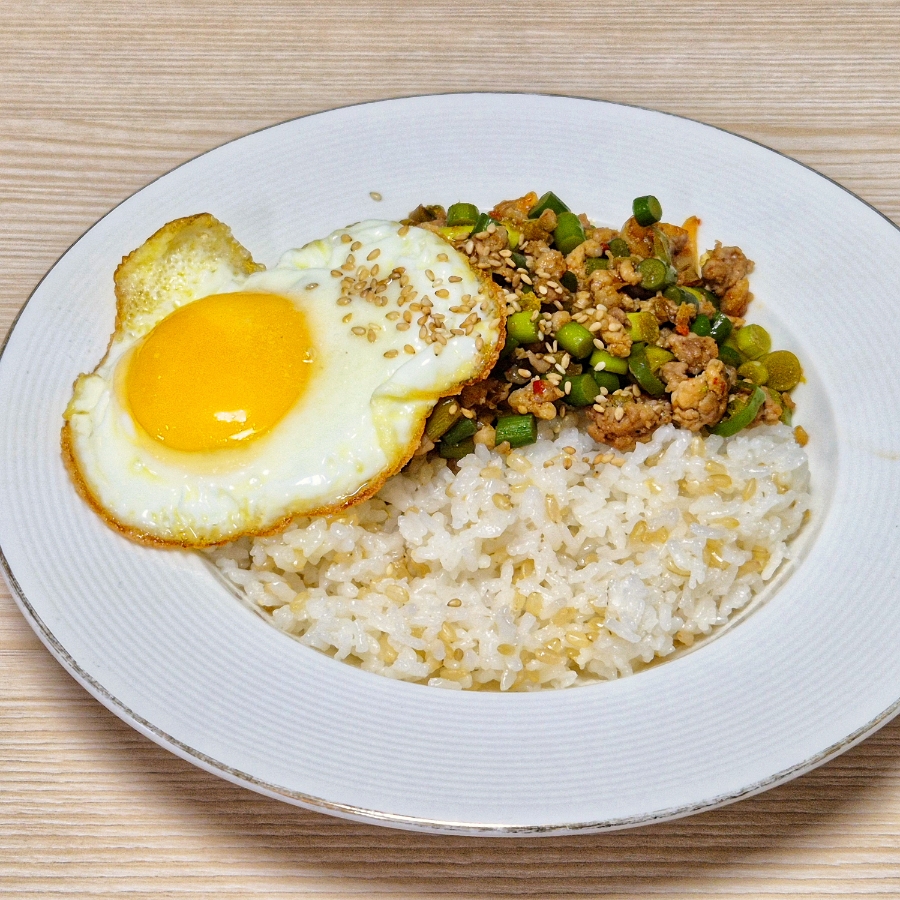
9Scoop a generous portion of rice into a bowl, then top with the stir-fried pork and the fried egg. Your Thai-style fried rice is ready.
Making Thai-style pad kra pao moo sap at home isn’t as difficult as it looks.
It has that distinct Southeast Asian aroma, but the flavor feels familiar enough that you’ll find yourself craving it again and again.
It’s not an exact match for what you’d get at a restaurant, but it comes impressively close.
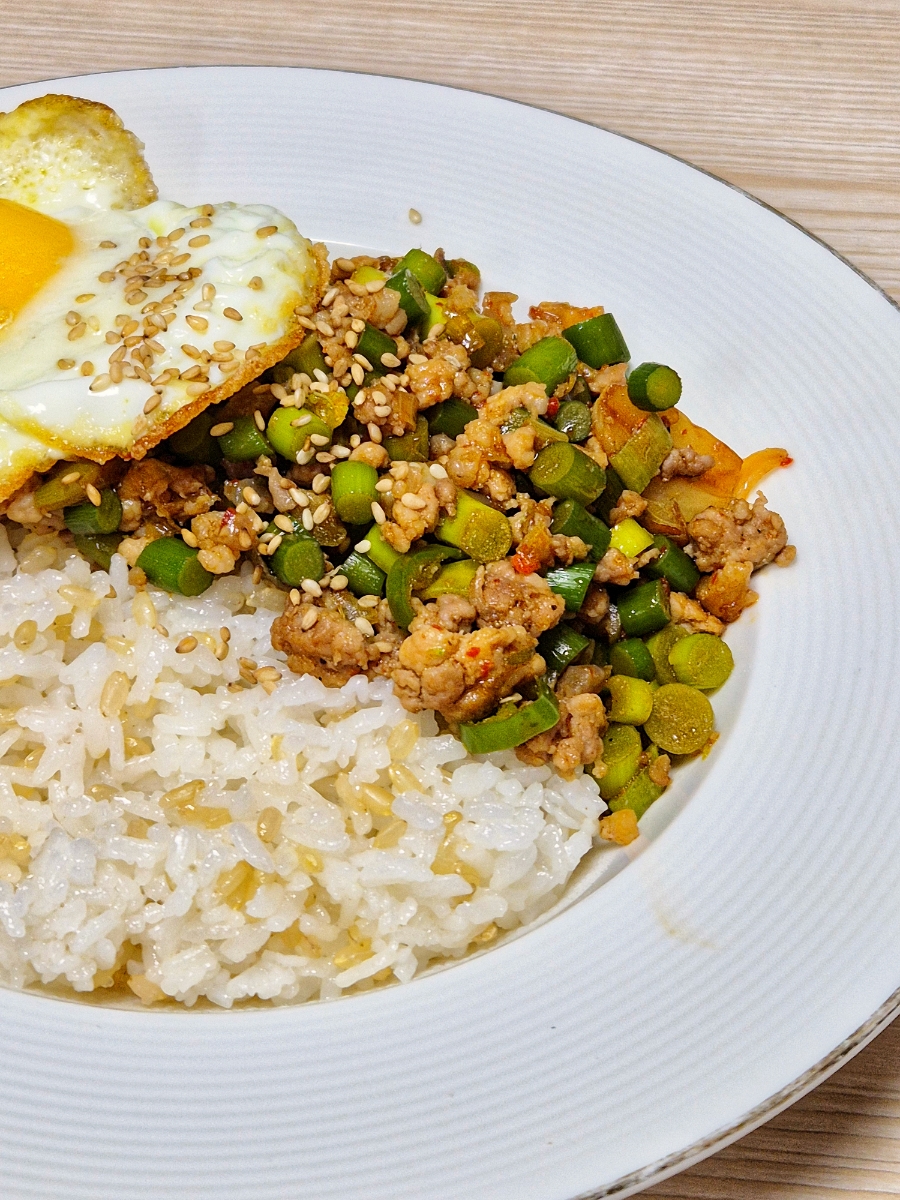
If the seasoning tastes a little light, adjust it with a splash of soy sauce or a pinch of salt.

We portioned ours into airtight containers to take as lunch boxes for the week.
It’s a simple dish, but it makes for a satisfying, filling meal on its own.
That wraps up this recipe for pad kra pao moo sap, Thai-style fried rice that’s as good to look at as it is to eat.
The garlic scapes add a wonderful crunch to every bite, so I hope you’ll give this combination a try in your own kitchen.
Ingredients
- Rice – 6 to 8 servings (cooked rice, about one bowl per serving)
- Pork shoulder – 550g (about 1.2 lbs; ground or finely chopped pork shoulder, also called foreleg cut)
- Garlic scapes – 300g (about 10.5 oz; also known as garlic stems)
- Cheongyang chili peppers – 3 (Korean hot green chili peppers; can substitute with jalapeño or serrano peppers)
- Garlic – 15 cloves
- Green onion – 150g (about 5.3 oz)
- Gochugaru – 1 T (Korean red chili pepper flakes)
- Egg – to taste (as many as you like, for frying)
- (1 T = 15 ml / 0.5 fl oz, 1 t = 5 ml / 0.17 fl oz)
Sauce
- Sugar – 1 T
- Pepper – to taste
- Mirin – 2 T (Japanese sweet rice wine)
- Fish sauce – 4 T
- Jin-ganjang – 1 T (Korean soy sauce used for everyday cooking; regular soy sauce works as a substitute)
- Dark soy sauce – 1 T (also called no-chu or lao chou, a Chinese-style aged soy sauce used mainly for color; regular soy sauce can be substituted if unavailable)
- Oyster sauce – 1 T
- (1 T = 15 ml / 0.5 fl oz, 1 t = 5 ml / 0.17 fl oz)
How to Make It
- Finely chop all the vegetables.
Tip.Cut the garlic scapes into small pieces, about the size of a pea. This keeps the texture soft and makes them much easier to eat. - Heat plenty of oil in a pan and sauté the green onion and garlic over medium heat until golden and fragrant.
- Once golden, add a spoonful of gochugaru and stir-fry well.
- Once the gochugaru is fully mixed in, push everything to one side of the pan and add the ground pork to cook.
- When the pork is just slightly underdone and still a bit pink, add all the sauce ingredients and continue stir-frying.
- Once the pork is fully cooked and the sauce has soaked in, add the garlic scapes and stir-fry.
- Stir-fry for another 2 to 3 minutes, then add a spoonful of sugar and pepper to taste before finishing.
Tip.Adding sugar too early can cause it to burn and turn bitter, so it's best saved for the very end, almost like coating the dish in a thin glaze. The sugar also helps round out the pungent edge of the fish sauce, balancing the overall flavor. - Fry an egg to top the dish.
Tip.Use plenty of oil and make sure the pan is well heated before adding the egg - this gives it a crisp, almost deep-fried texture that makes all the difference. - Scoop a generous portion of rice into a bowl, then top with the stir-fried pork and the fried egg. Your Thai-style fried rice is ready.