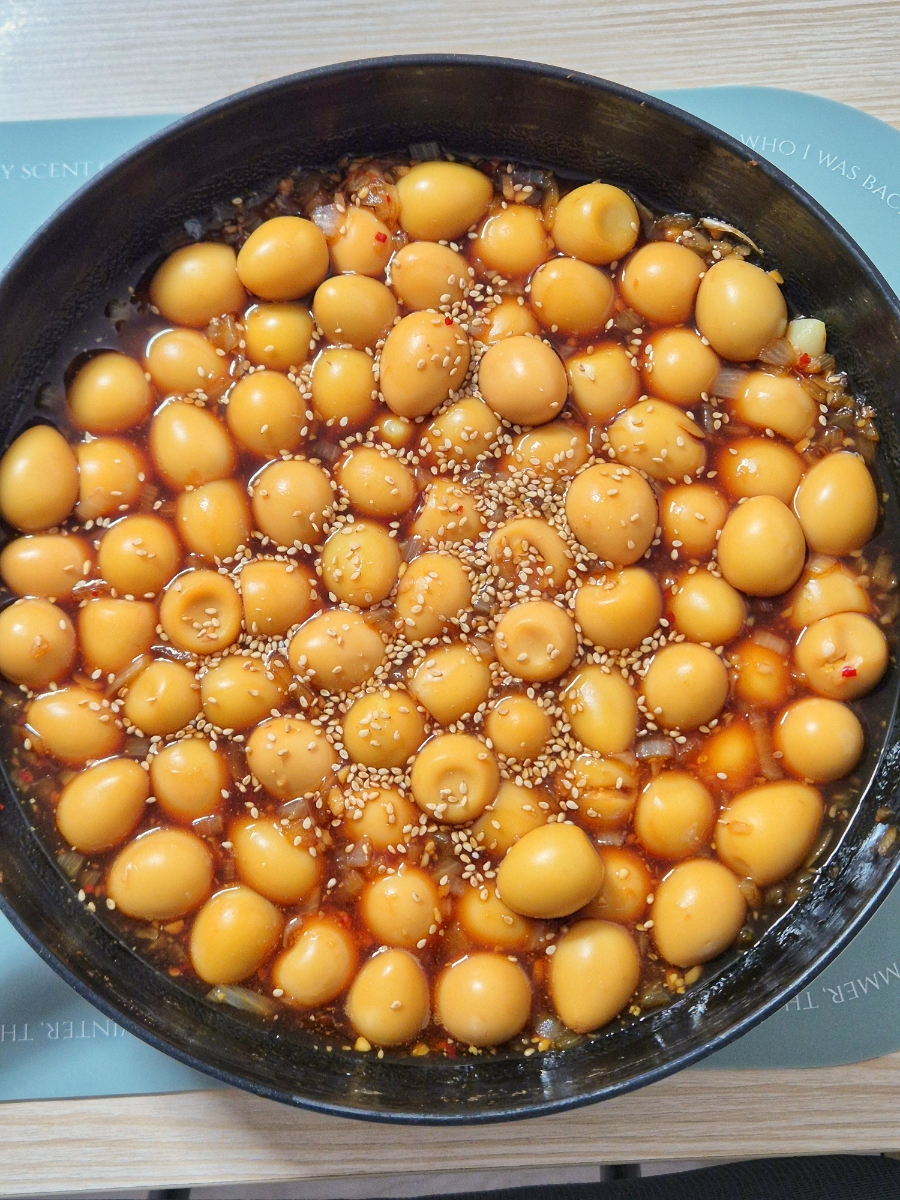
I decided to try this quail egg jangjorim recipe from a school-lunch chef because the ingredient list looked so simple and the process seemed easy, yet everyone raved about the flavor.
Compared to a regular jangjorim, the seasoning here soaks in much more deeply, and the subtle sweetness balances perfectly with the savory depth, making it the kind of banchan you keep reaching for over rice.
Once you make a batch, it keeps well in the fridge for several days, so it’s become one of my go-to dishes whenever I need a reliable side.
Ingredients
- Quail eggs – 1kg (about 2.2 lbs; using pre-peeled quail eggs makes this much more convenient)
- Onion – 1
- Garlic cloves – 15 (whole, unpeeled cloves work best for braising)
- Peperoncino – 0.2T (dried Italian chili pepper; can substitute with cheongyang chili pepper)
- Starch – 0.3T (potato or corn starch, used to make the thickening slurry)
(1 T = 15 ml / 0.5 fl oz, 1 t = 5 ml / 0.17 fl oz)
Sauce
- Jin-ganjang – 12T (Korean soy sauce commonly used for everyday cooking)
- Cooking wine – 4T (Korean maesul cooking wine; mirin can be substituted)
- Tuna sauce – 1T (Korean concentrated tuna extract; can substitute with fish sauce or a bit more soy sauce)
- Dark brown sugar – 4T
- Minced garlic – 1T
- Corn syrup – 6T (Korean mulyeot; can substitute with corn syrup or honey)
- Anchovy stock powder – 0.3T (myeolchi dasida; can substitute with dashi powder or a pinch of salt)
- Water – 14T
(1 T = 15 ml / 0.5 fl oz, 1 t = 5 ml / 0.17 fl oz)
How to Make It
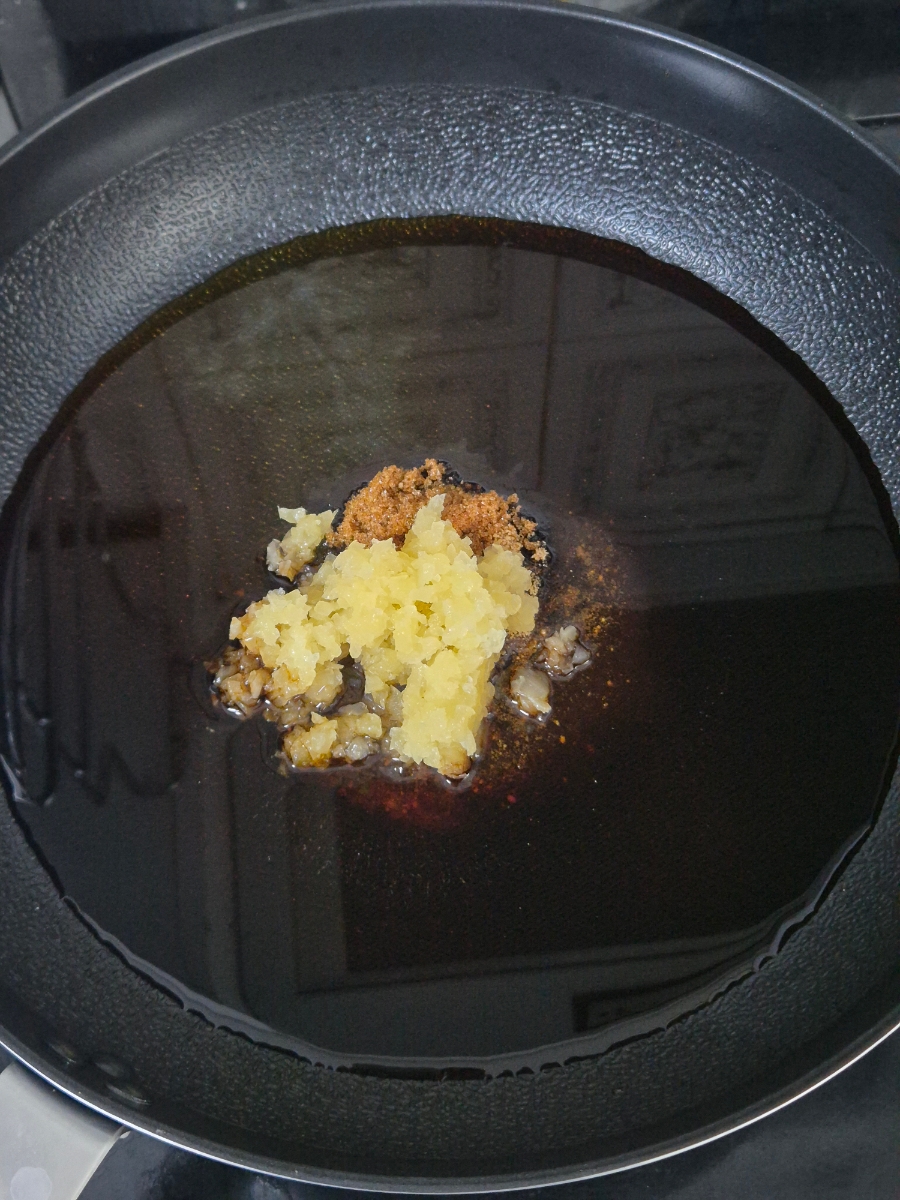
1In a pot, combine the jin-ganjang, cooking wine, tuna sauce, dark brown sugar, minced garlic, corn syrup, anchovy stock powder, and water, then stir well to make the braising sauce.
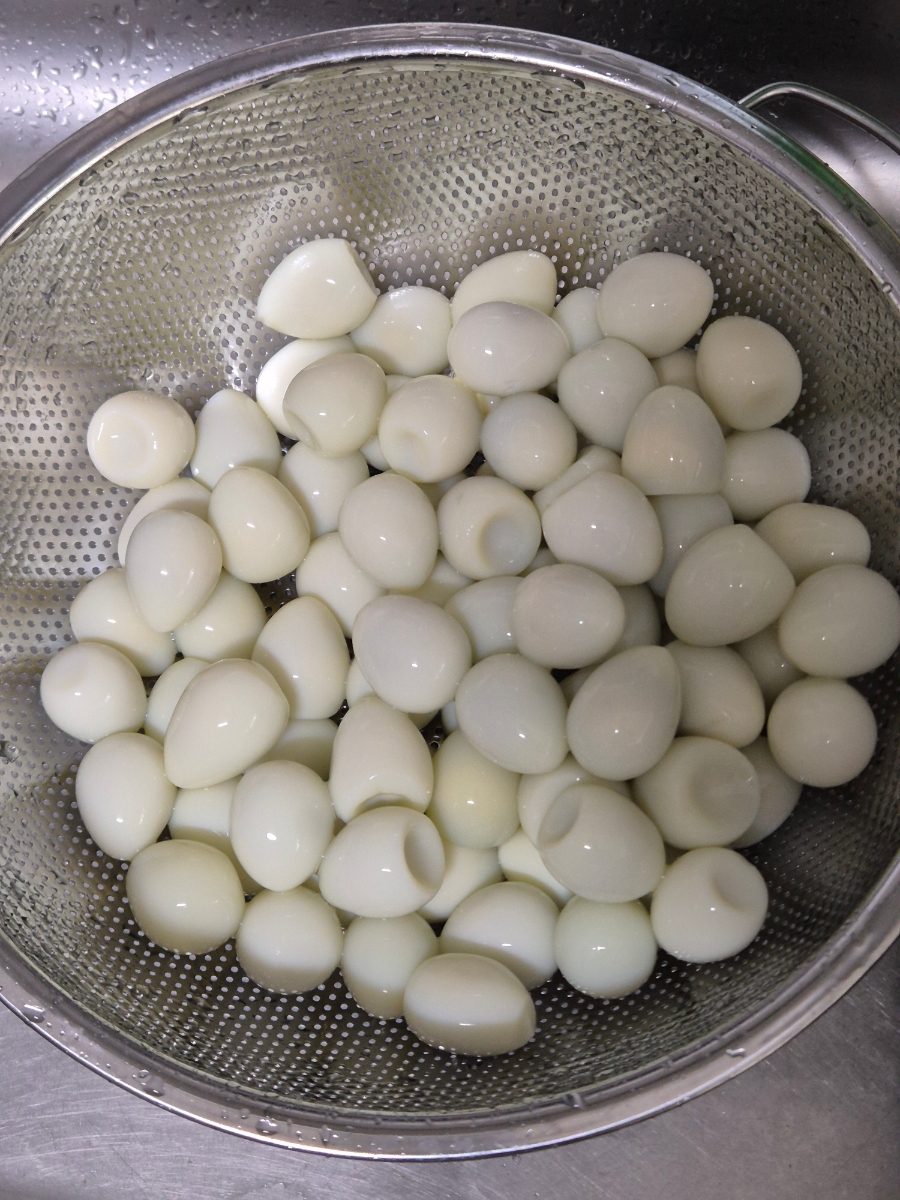
2Rinse the quail eggs once under running water and set them aside.
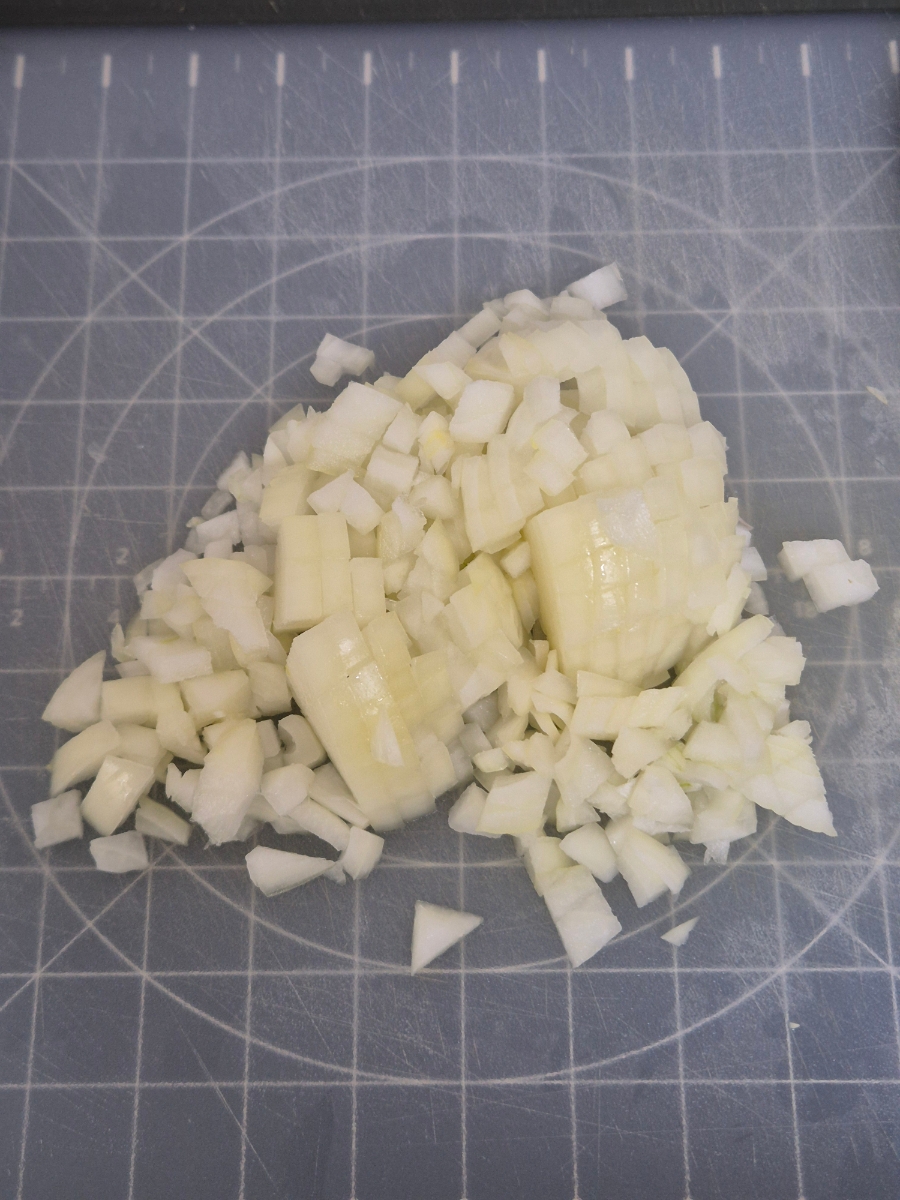
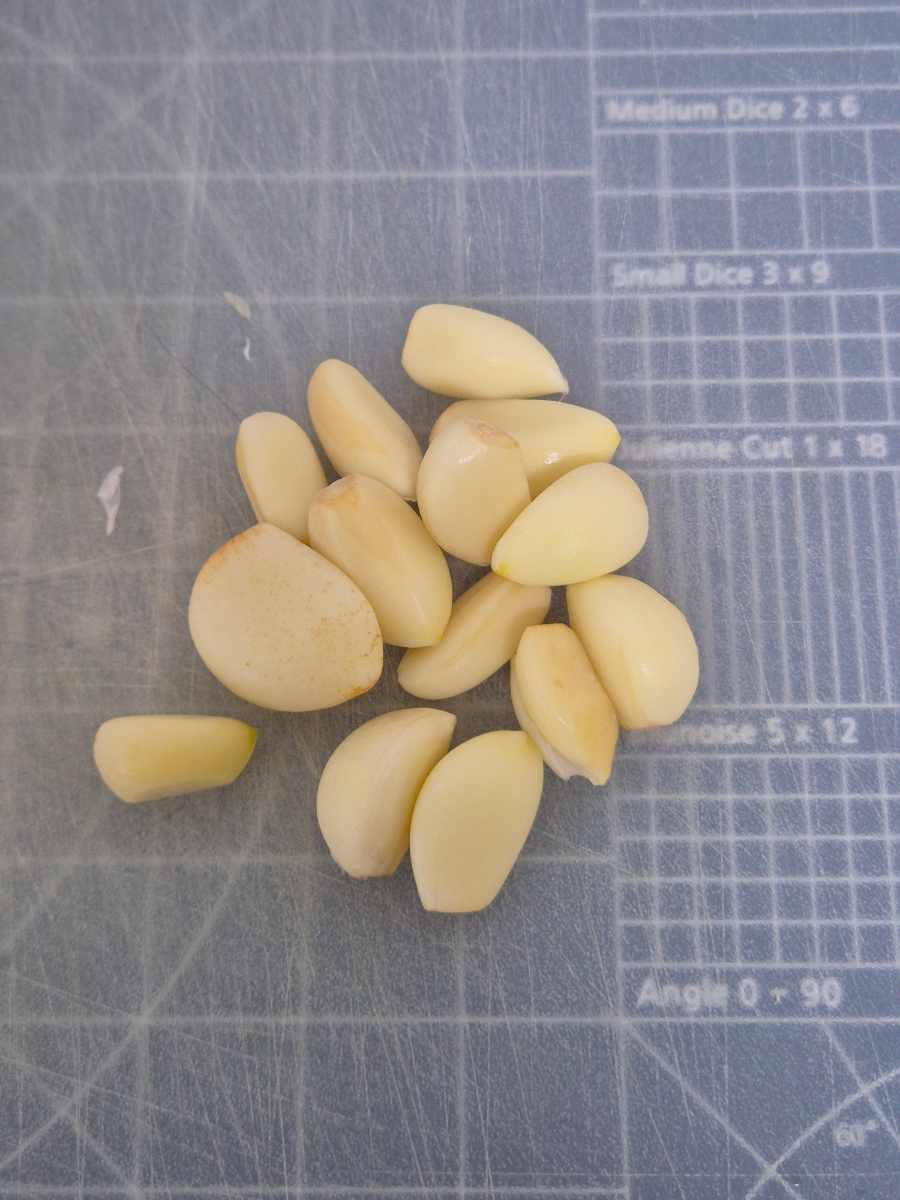
3Chop the onion into small pieces and have the whole garlic cloves ready.
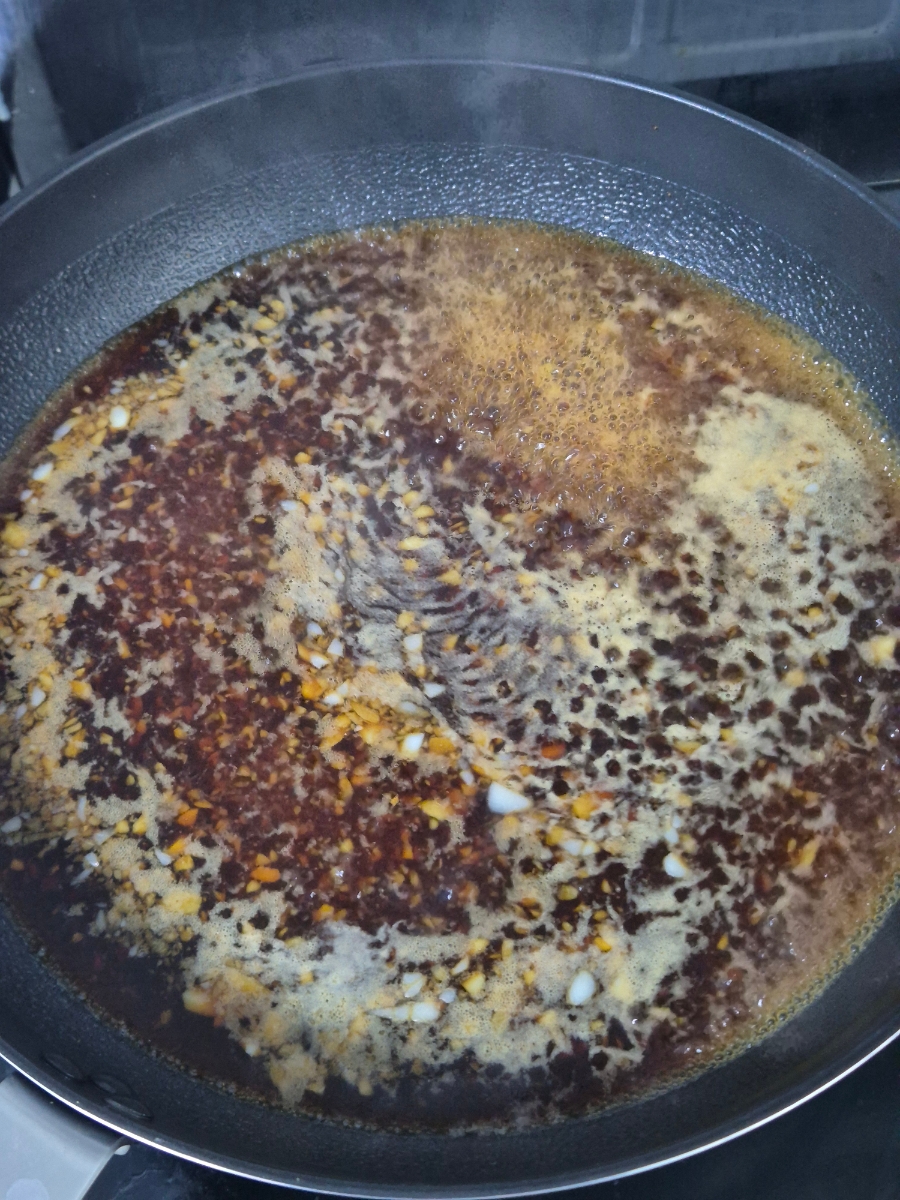
4Bring the sauce to a boil over high heat.
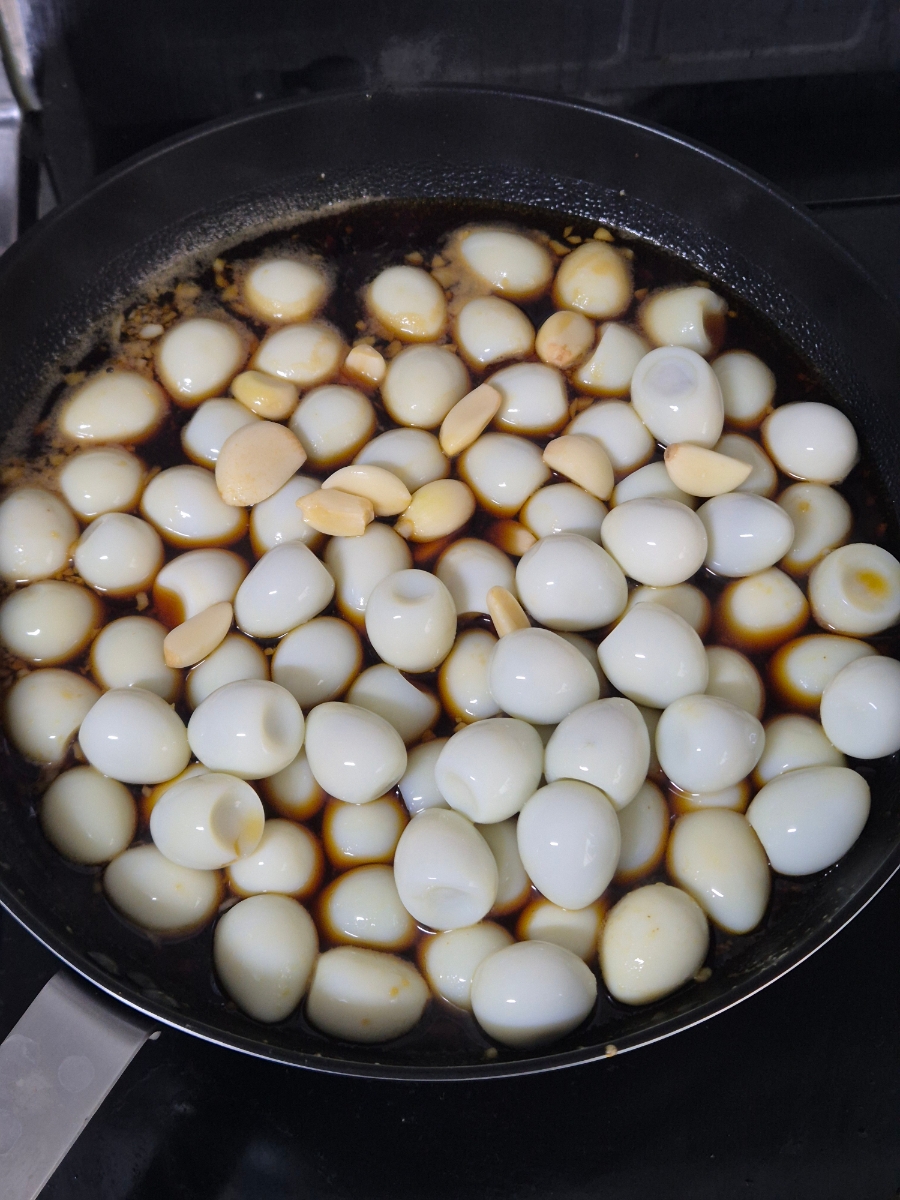
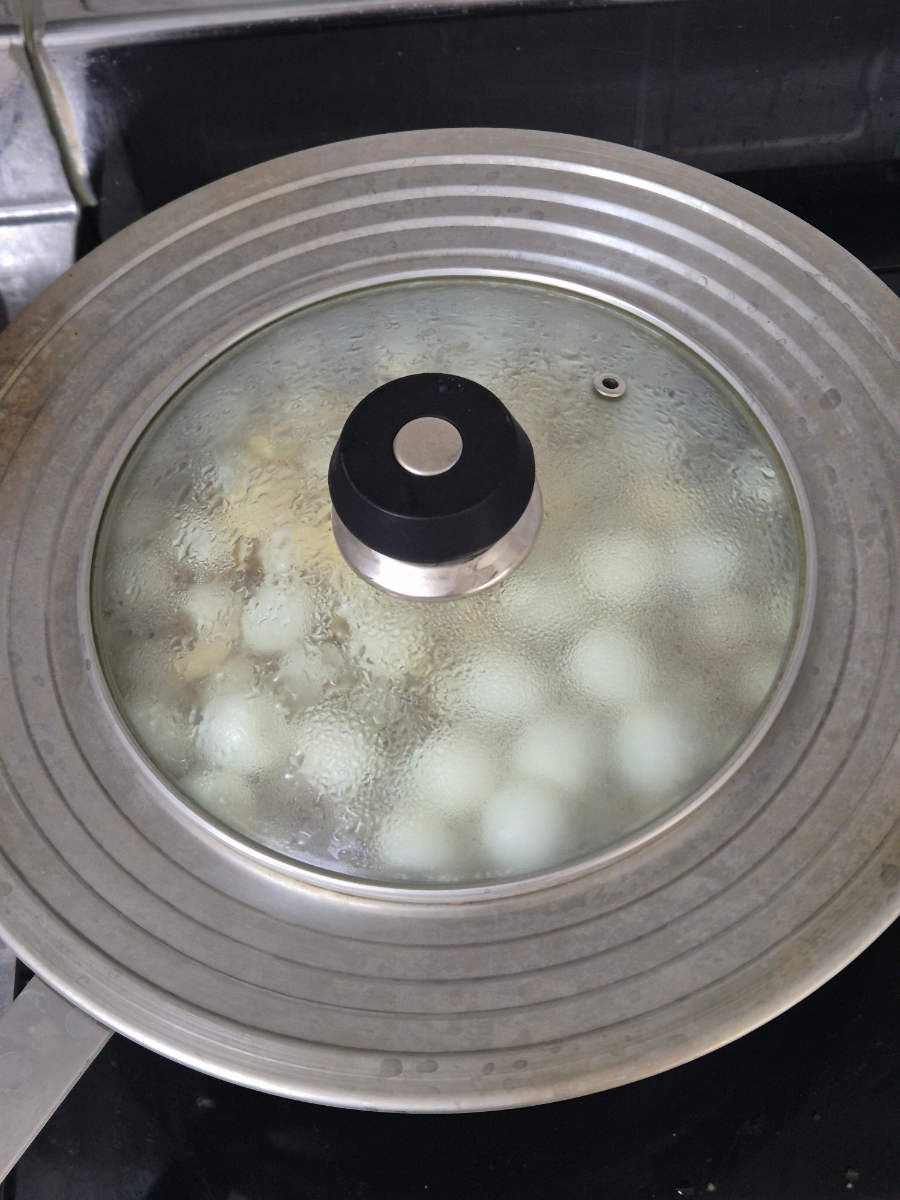
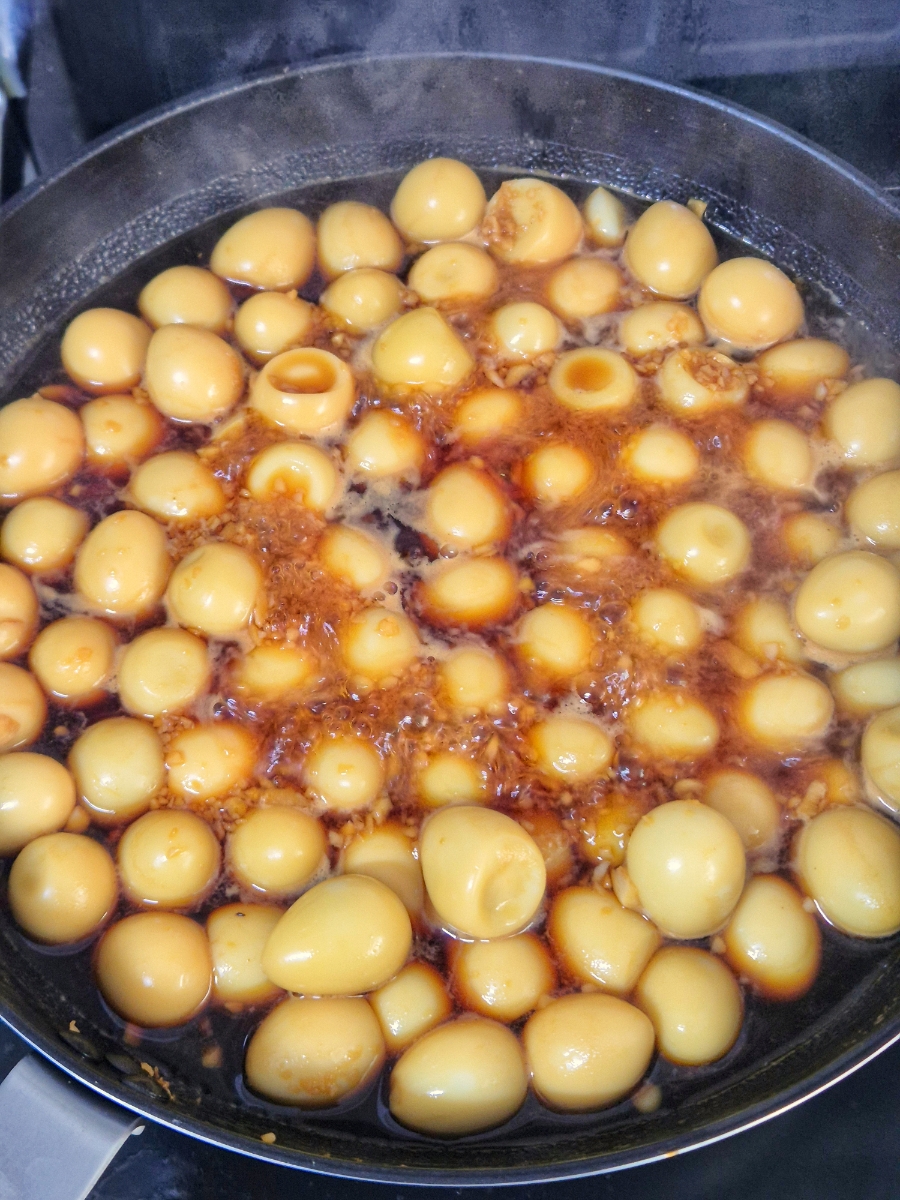
5Once the sauce starts boiling, lower the heat, add the quail eggs and garlic cloves, cover with a lid, and simmer for 10 minutes.
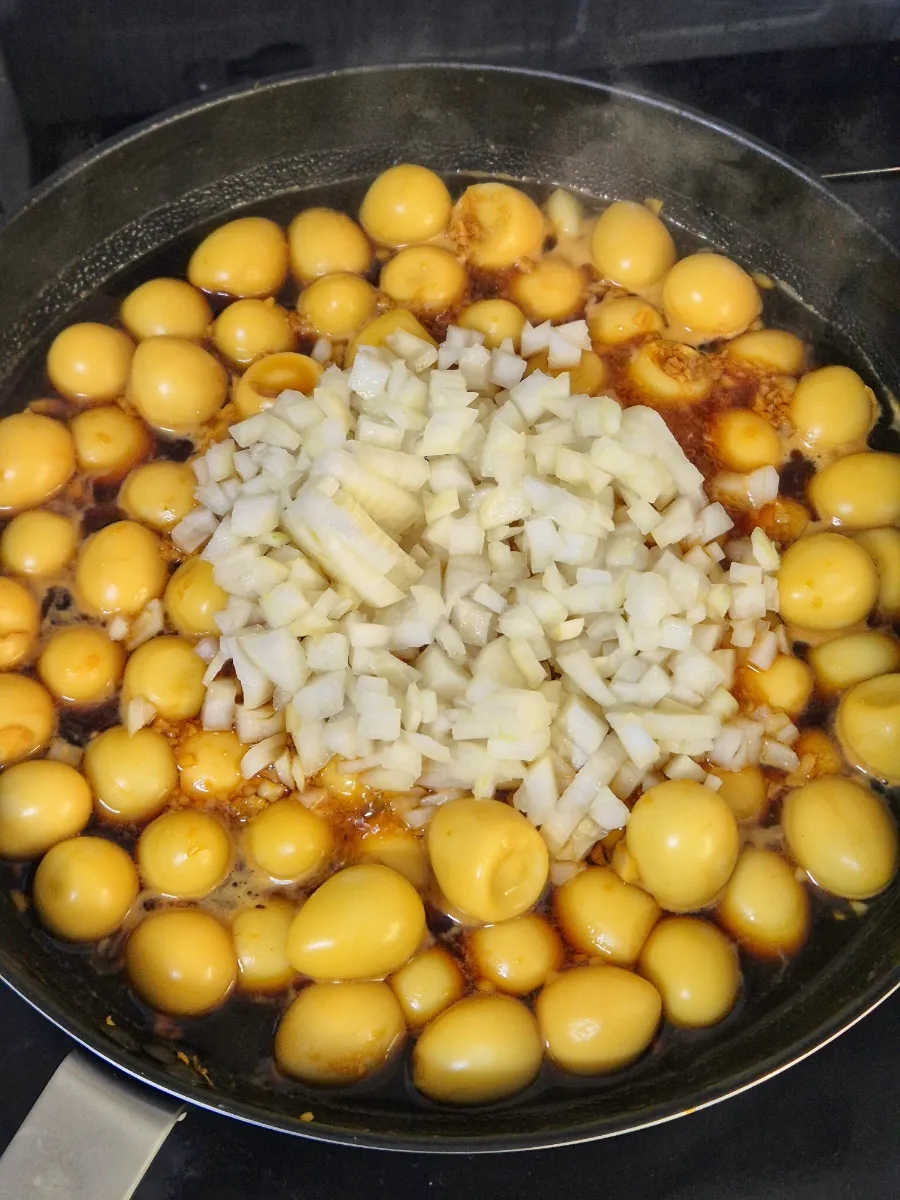
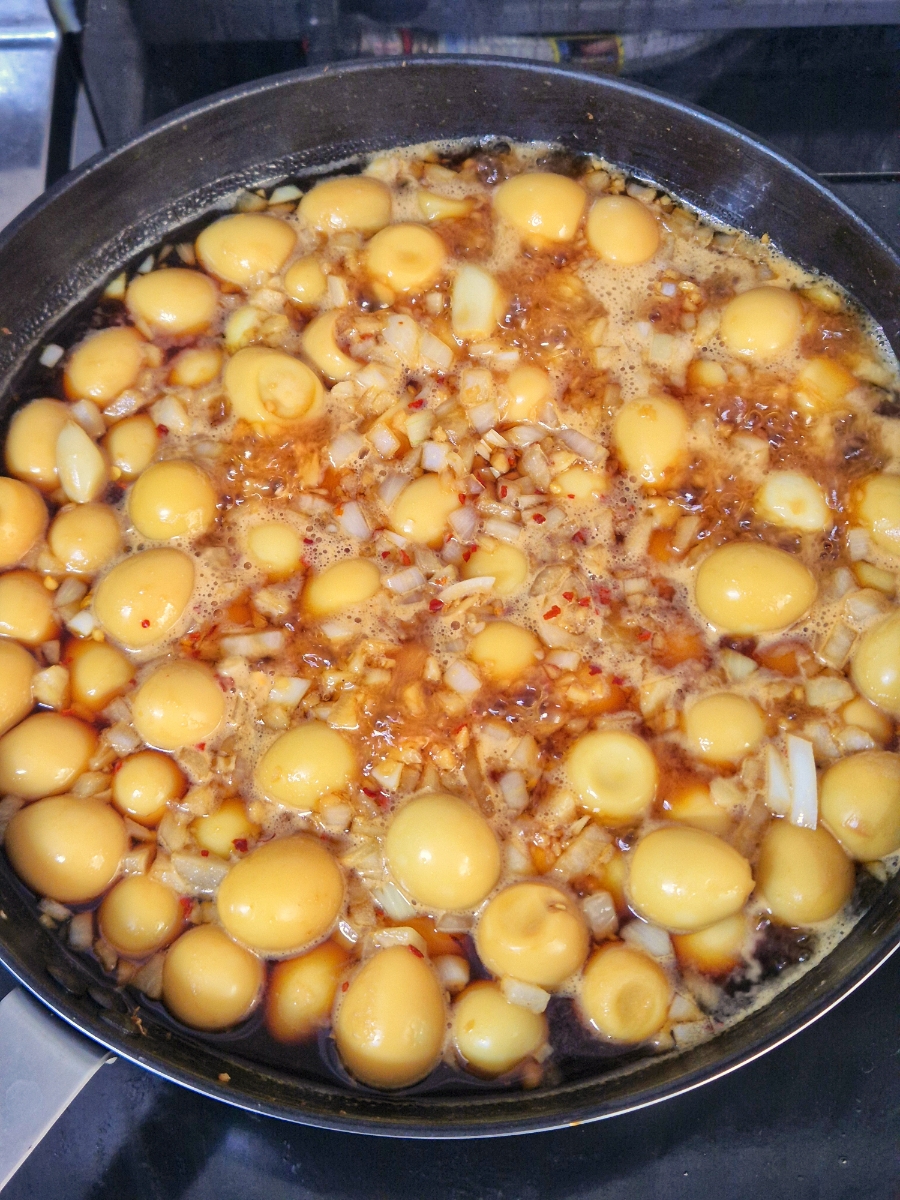
6After 10 minutes, remove the lid, add the onion and peperoncino, and simmer for another 10 minutes over low heat.
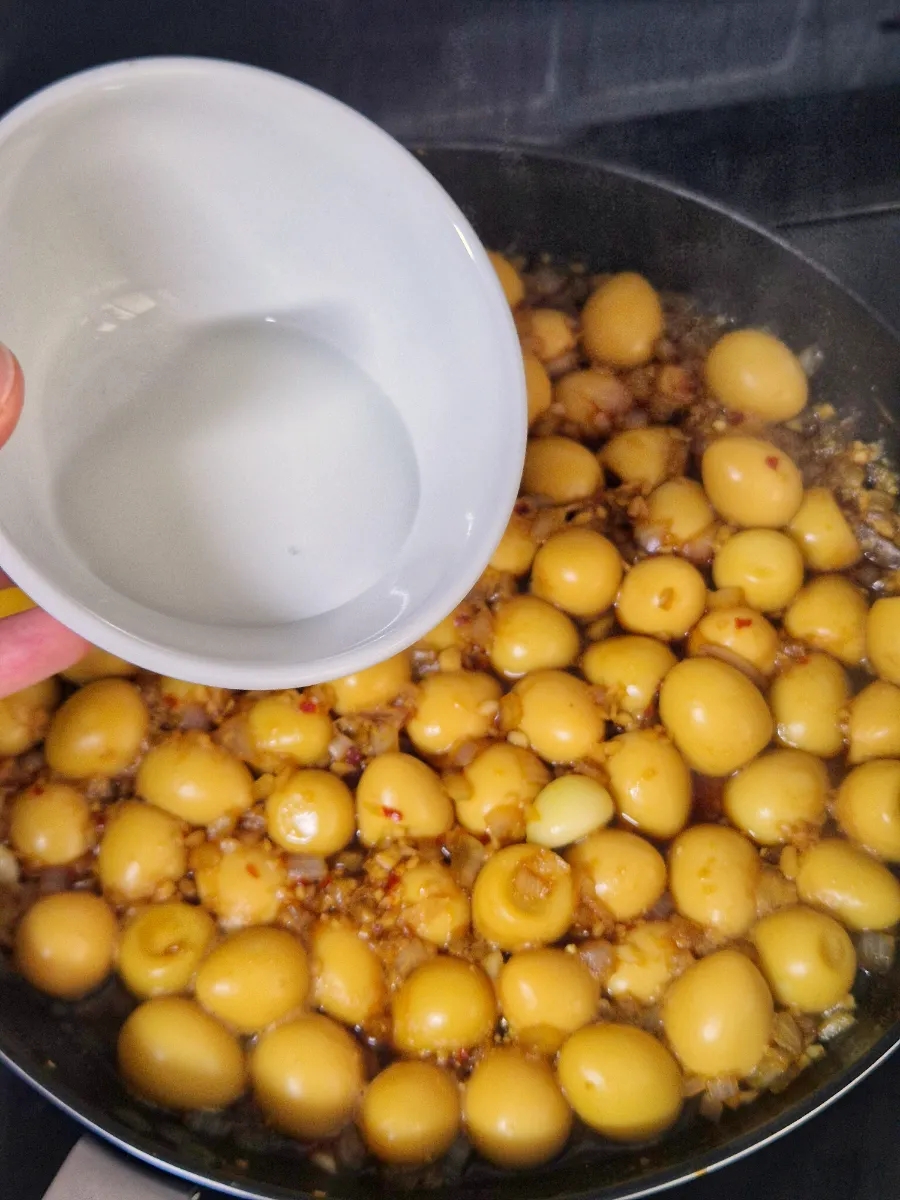
7Finally, pour in the starch slurry and stir well to adjust the sauce to your desired thickness.
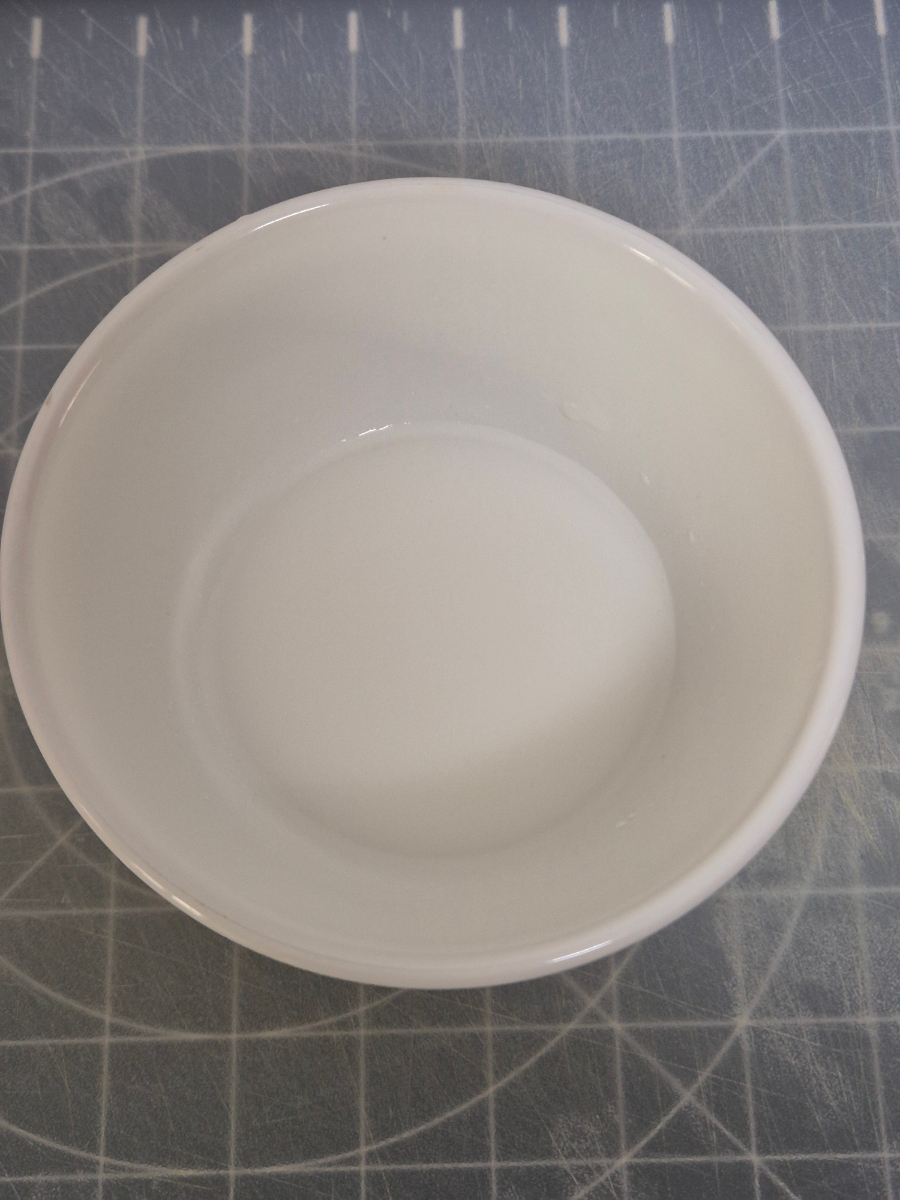
8To make the starch slurry, mix 0.3 T of starch with about 1 T of water.
Since everyone has a different preference for how thick the sauce should be, add the slurry gradually and adjust to taste rather than pouring it all in at once.
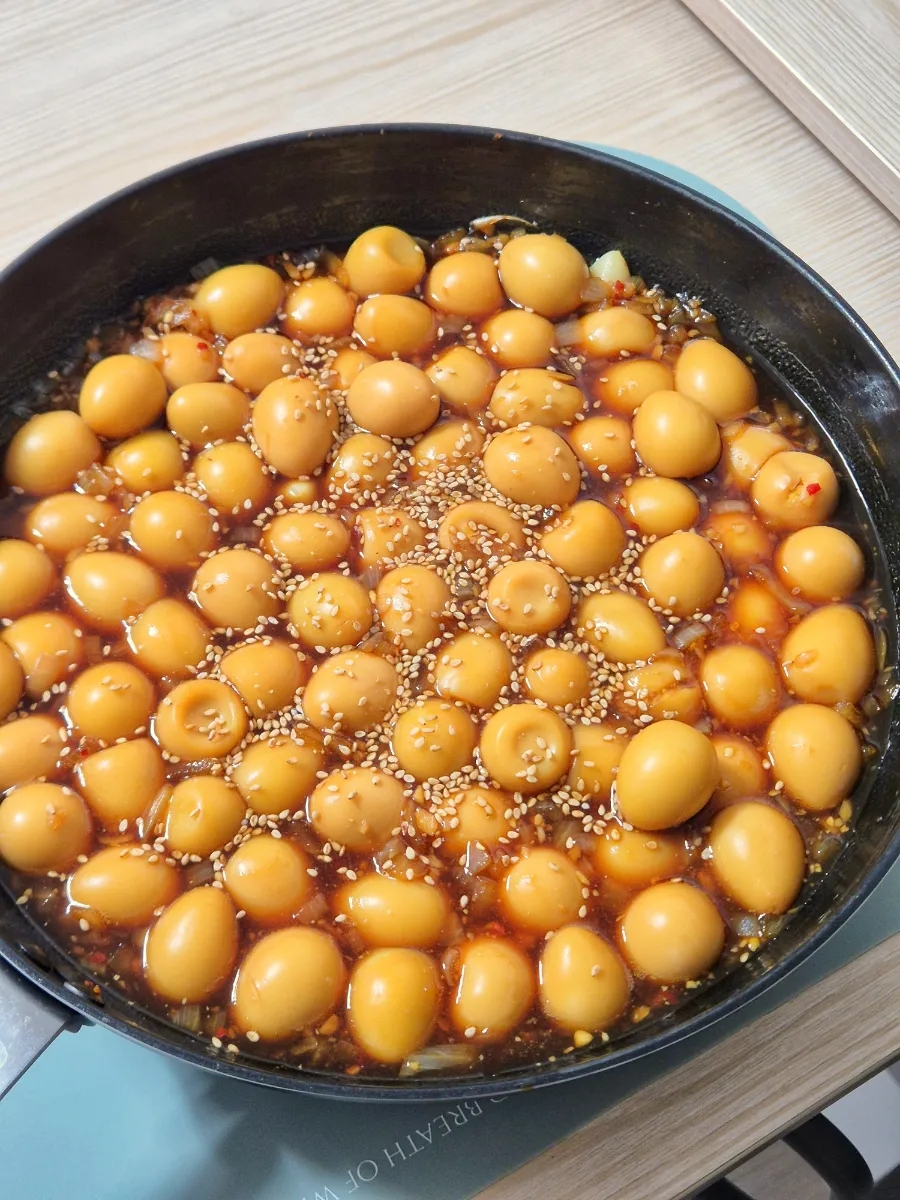
9Finish by generously sprinkling toasted sesame seeds on top.
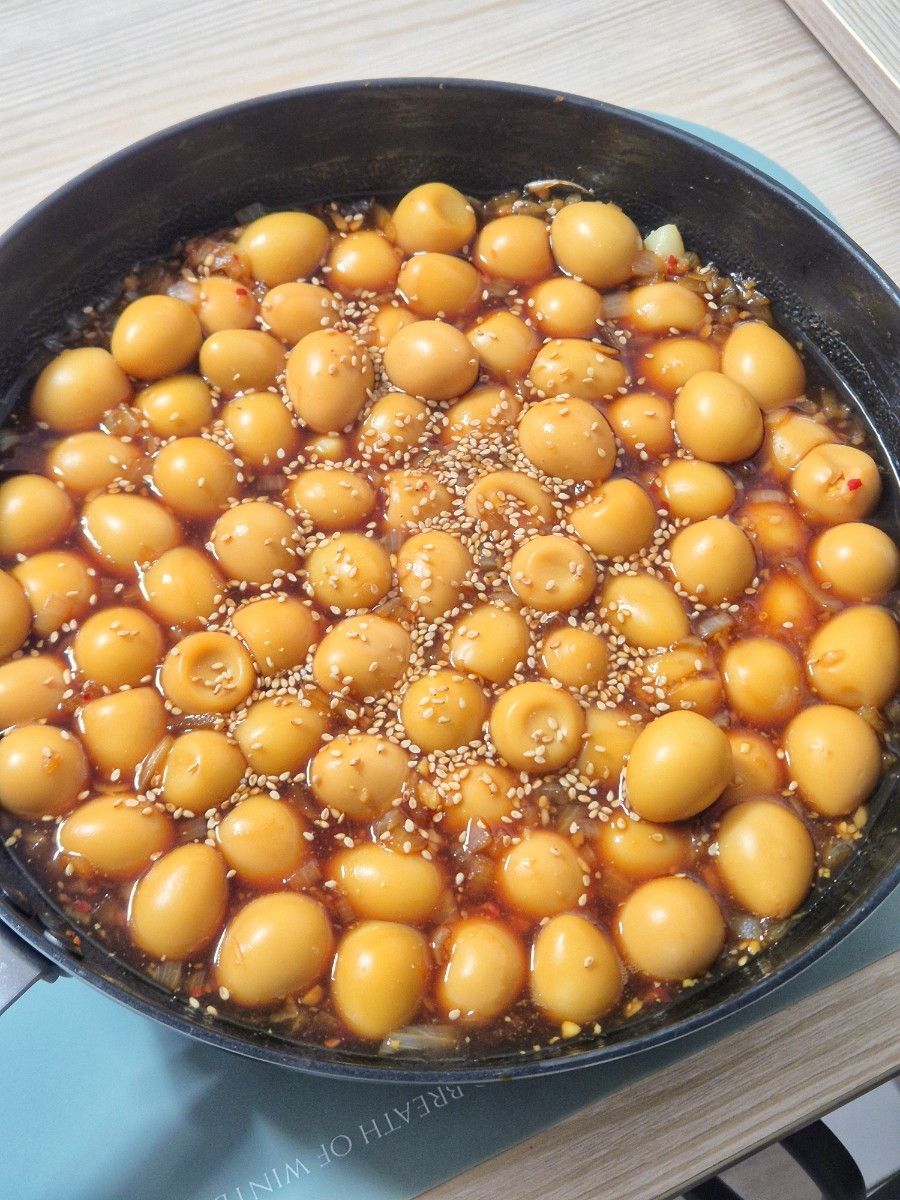
Most quail egg jangjorim recipes call for a long simmer in soy sauce, but this version lets the flavor soak in within a relatively short time, which made the whole process much more convenient.
The natural sweetness from the whole garlic cloves and onion blends beautifully with the seasoning, and the small amount of peperoncino cuts through any richness without adding real heat, so it’s mild enough for kids to enjoy too.
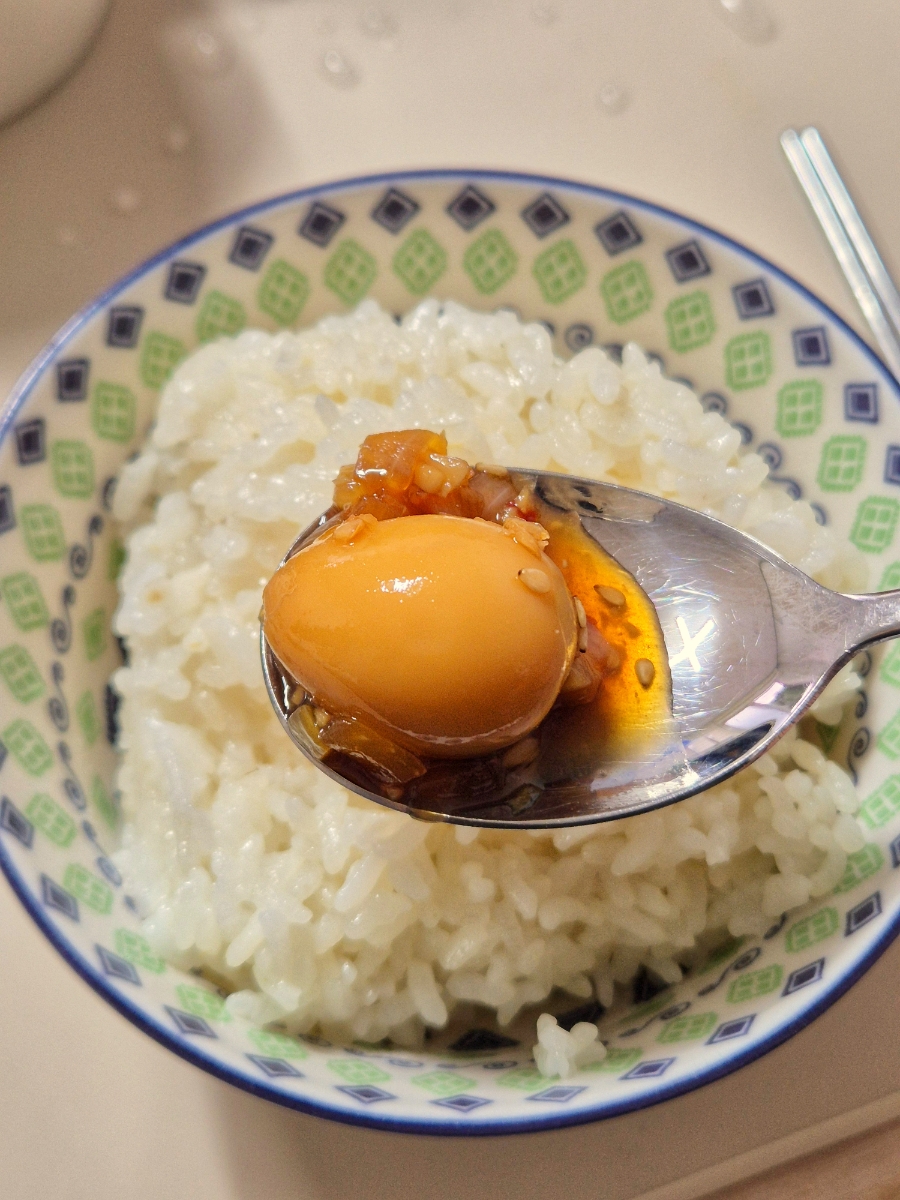
Whenever you’re stuck for a side dish idea, this is one you can make ahead and rely on for several days.
It actually tastes even better the next day once it’s been sitting in the fridge and the seasoning has had time to deepen, so I definitely recommend giving it a try.
Ingredients
- Quail eggs – 1kg (about 2.2 lbs; using pre-peeled quail eggs makes this much more convenient)
- Onion – 1
- Garlic cloves – 15 (whole, unpeeled cloves work best for braising)
- Peperoncino – 0.2T (dried Italian chili pepper; can substitute with cheongyang chili pepper)
- Starch – 0.3T (potato or corn starch, used to make the thickening slurry)
- (1 T = 15 ml / 0.5 fl oz, 1 t = 5 ml / 0.17 fl oz)
Sauce
- Jin-ganjang – 12T (Korean soy sauce commonly used for everyday cooking)
- Cooking wine – 4T (Korean maesul cooking wine; mirin can be substituted)
- Tuna sauce – 1T (Korean concentrated tuna extract; can substitute with fish sauce or a bit more soy sauce)
- Dark brown sugar – 4T
- Minced garlic – 1T
- Corn syrup – 6T (Korean mulyeot; can substitute with corn syrup or honey)
- Anchovy stock powder – 0.3T (myeolchi dasida; can substitute with dashi powder or a pinch of salt)
- Water – 14T
- (1 T = 15 ml / 0.5 fl oz, 1 t = 5 ml / 0.17 fl oz)
How to Make It
- In a pot, combine the jin-ganjang, cooking wine, tuna sauce, dark brown sugar, minced garlic, corn syrup, anchovy stock powder, and water, then stir well to make the braising sauce.
- Rinse the quail eggs once under running water and set them aside.
- Chop the onion into small pieces and have the whole garlic cloves ready.
- Bring the sauce to a boil over high heat.
- Once the sauce starts boiling, lower the heat, add the quail eggs and garlic cloves, cover with a lid, and simmer for 10 minutes.
- After 10 minutes, remove the lid, add the onion and peperoncino, and simmer for another 10 minutes over low heat.
- Finally, pour in the starch slurry and stir well to adjust the sauce to your desired thickness.
- To make the starch slurry, mix 0.3 T of starch with about 1 T of water.
- Finish by generously sprinkling toasted sesame seeds on top.